Key figures
- $117.64Brent settlement on 30 October, a six-month high, after a 13.6% rise over the month.Investing.com via Yahoo Finance
- 35minimum number of attacks on shipping in the Gulf and Hormuz that UKMTO counted in October, the highest monthly total of the conflict.Investing.com via Yahoo Finance
- 10.9 millionbarrels a day of oil that passed through the Strait of Hormuz in September, according to the IEA.gCaptain
- 239,000visitors from more than 170 countries expected at ADIPEC 2026 in Abu Dhabi.Gulf News
- 17 per centshare of Qatar's LNG capacity knocked out by an Iranian strike on Ras Laffan.The National
What is ADIPEC 2026 and who is attending?
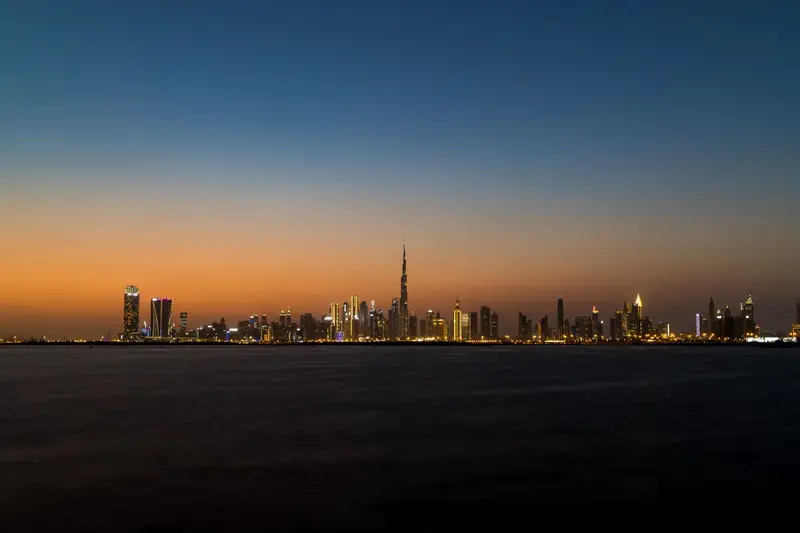
The Abu Dhabi International Petroleum Exhibition and Conference (ADIPEC) runs from 2 to 5 November 2026 at the Abu Dhabi National Exhibition Centre (ADNEC) [1]. The opening ceremony moves to the Abu Dhabi Energy Centre [1]. The show is hosted by the Abu Dhabi National Oil Company (ADNOC) and organised by dmg events [1]. Its official site carries the line "Where energy opportunity takes shape" [1].
Gulf News reports that organisers expect 239,000 visitors from more than 170 countries [2]. It lists more than 2,250 exhibiting companies, 1,800 speakers, 30 country pavilions and more than 380 sessions across 16 halls [2]. The event is held under the patronage of UAE President Sheikh Mohamed bin Zayed Al Nahyan [2].
Confirmed speakers include the UAE energy minister, Suhail Al Mazrouei, and ministers from Egypt, Jordan, Bahrain, Lebanon and Libya [2]. Germany's Katherina Reiche, Türkiye's Alparslan Bayraktar and Japan's Kei Takagi are also listed [2]. Abdulmunim Saif Al Kindy, chairman of ADIPEC 2026, said the event "takes place this year at a pivotal moment for the global energy sector" [2].
ADNOC has already used the run-up to the show for supplier announcements. At its Make it with Adnoc Forum on 25 October, it offered Dh60 billion ($16.3 billion) of local manufacturing opportunities covering more than 200 products [3].
What state is the Strait of Hormuz in as the industry gathers?
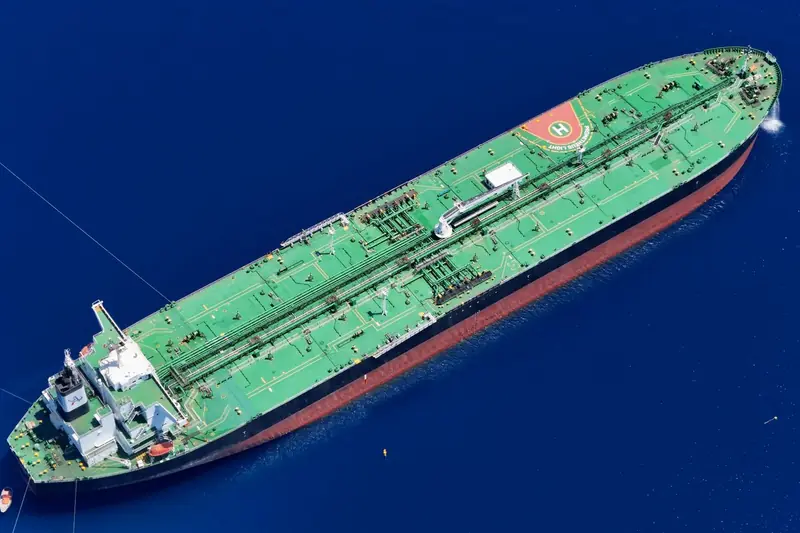
Traffic is still thin. The UK Maritime Trade Operations centre (UKMTO) recorded 122 outbound and 155 inbound transits in the week to 28 October [4]. That is roughly 70% below pre-war levels [4]. UKMTO also counted at least 35 attacks on shipping in October, the most in any month since the conflict began in February [4].
The latest incidents came days before the show. UKMTO said a small boat attached two explosive devices to a tanker on 29 October, about 25 nautical miles north-east of Khasab, Oman [5]. The fire was put out and no crew were hurt [5]. Iran's Revolutionary Guard said several tankers caught fire after using routes it calls unauthorised; those claims could not be independently verified [4,5]. The commander of US Central Command, Adm. Brad Cooper, said the main shipping lanes had been cleared of mines [5].
Volumes have nonetheless recovered from the spring. The International Energy Agency (IEA) put oil flows through the strait at 10.9 million barrels a day (mb/d) in September, gCaptain reported [6]. Refined products lag far behind. Middle East product shipments were 1.9 mb/d in September, against 4.7 mb/d before the war [6].
Shipping costs reflect the risk. Daily supertanker earnings on Middle East–East Asia routes are up more than 4,400% this year, according to Baltic Exchange assessments cited by Enterprise AM [7]. Shipbrokers told Bloomberg that some Gulf voyages were booked at up to $40 million [7]. In July, broker Marsh put war-risk premiums at 3% to 10% of hull value, against about 0.25% before the war [8].
How are Gulf producers getting crude to market?
Mostly by pipeline and shuttle tanker. Kpler says at least 16.5 mb/d of crude left the region between 1 and 28 September [9]. Some 60% of it crossed Hormuz, against 83% before the war [9]. Another 23% loaded on the Gulf of Oman coast, mainly at Fujairah, and 17% left from the Red Sea [9].
Saudi Arabia's East-West pipeline carries the largest share of bypass barrels. Energy Minister Prince Abdulaziz bin Salman said on 6 October that it was pumping 5.8 million barrels a day [10]. Its maximum capacity is 7 million, and Kpler put August flows at about 2 million after an attack on the line [10]. The minister said the kingdom began using the pipeline again "within five or six days" of that attack [10].
The UAE relies on the Habshan–Fujairah line, also known as the Abu Dhabi Crude Oil Pipeline. Gulf News reports it can carry up to 1.8 million barrels a day [11]. Kpler says Fujairah loadings rose from 1.1 mb/d to 2.7 mb/d, a total that includes crude moved by shuttle tankers [9].
More capacity is coming. ADNOC chief executive Sultan Al Jaber said in May that a second pipeline to Fujairah was "almost 50% complete" and being accelerated towards 2027 [11]. Gulf News reports it is expected to double ADNOC's export capacity through Fujairah [11]. On 28 October Bloomberg reported that ADNOC had told some Asian refiners that offshore Upper Zakum crude could load at Fujairah in early 2027 [12]. ADNOC declined to comment, according to that report [12].
Why is Brent at a six-month high?
Brent settled at $117.64 a barrel on 30 October, up 2.4% on the day, after touching $118 [4]. It gained 13.6% in October, while West Texas Intermediate (WTI) rose 15.2% [4]. Oil & Gas Middle East reports that Brent's lowest close of the month was $100.20 on 7 October [13].
Data
| Brent | |
|---|---|
| 7 Oct | 100.20 |
| 16 Oct | 109.86 |
| 21 Oct | 108.82 |
| 22 Oct | 113.17 |
| 23 Oct | 116.72 |
| 26 Oct | 115.81 |
| 27 Oct | 113.88 |
| 30 Oct | 117.64 |
The rise followed the October surge in attacks and uncertainty over the talks [4]. Stocks offer a thinner cushion than before. The IEA says observed global oil stocks were 509 million barrels below pre-war levels at the end of September [6]. Its member countries had released about 330 million barrels from emergency stocks by mid-October [14]. On 15 October they agreed to speed up the remaining 100 million or so, including more than 20 million barrels of diesel [14].
The US Energy Information Administration (EIA) said spot Brent peaked at $131 on 15 September, after the attack on the East-West pipeline [15]. In its October outlook it assumed Middle East flows stay constrained through the fourth quarter, with most regional output back to pre-conflict levels by the end of the second quarter of 2027 [15].
What is happening to Qatar's LNG?
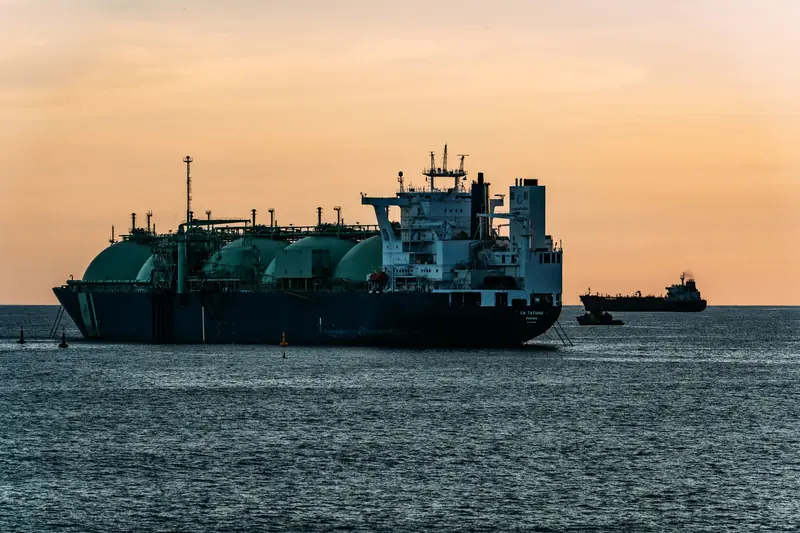
Gas exporters have fewer options than oil producers. QatarEnergy has extended force majeure on its shipments to the end of December, Italy's Edison said, according to The National [16]. An Iranian strike on Ras Laffan knocked out about 17 per cent of Qatar's liquefied natural gas (LNG) capacity [16].
QatarEnergy chief executive Saad Al Kaabi said undamaged facilities could restart within a week of a peace deal, if ships were available [16]. He said the two damaged trains would take about three years to repair, and ruled out bypass pipelines [16]. QatarEnergy has also signed 7 million tonnes a year of US LNG offtake with Cheniere and Woodside [16]. Europe's TTF gas benchmark rose above €95 per megawatt-hour in the week to 29 October [16].
What have ADNOC, the UAE and other producers said?
UAE officials stress the east coast. Abdulla Balalaa, Assistant Minister for Energy and Sustainability at the foreign ministry, said in remarks reported on 20 October that "the UAE has adopted a strategy of zero-Strait of Hormuz" for shipments [17]. He added: "The east coast of the UAE towards the Gulf of Oman is operational" [17].
Al Jaber has framed the issue around routes. "Too much of the world's energy still moves through too few choke points," he told an Atlantic Council event in May [11]. He also said a return to pre-conflict flows would take at least four months [11].
The UAE now sets output policy outside OPEC. It announced on 28 April that it would leave OPEC and OPEC+ from 1 May, citing near-term volatility including disruption in the Strait of Hormuz [18]. It said it would bring more production to market gradually, in line with demand [18].
Other producers have warned about resilience. Saudi Aramco chief executive Amin Nasser said on 5 October that "the system is already straining" [19]. He estimated that nearly three billion barrels of supply had been lost since late February [19]. He said rebuilding inventories could take as long as two years [19]. Tamas Varga of PVM told Al Jazeera that only a credible US–Iran peace deal would restore the pre-conflict status quo [19].
- 15 OctIEA speeds up stock releaseAbout 100 million barrels, including more than 20 million of diesel
- 20 OctUAE outlines zero-Hormuz shipping strategyEast coast route operational, says Abdulla Balalaa
- 25 OctADNOC supplier forumDh60 billion of local manufacturing opportunities
- 28 OctADNOC Fujairah plan reportedUpper Zakum loadings at Fujairah from early 2027, per Bloomberg
- 29 OctQatar force majeure to end-DecemberAbout 17 per cent of LNG capacity knocked out
- 30 OctBrent settles at $117.64At least 35 attacks on shipping in October, per UKMTO
- 31 OctTalks due to continue in DohaDraft reportedly reopens the strait within seven days of an initial understanding
- 2–5 NovADIPEC 2026, Abu DhabiADNEC; hosted by ADNOC
What to watch during and after ADIPEC
- The Doha talks. Talks were due to continue in Doha on 31 October after more than 12 hours of discussions in Tehran, ANI reported, citing Axios [20]. A draft framework reported by Al Arabiya English would reopen the strait within seven days of an initial understanding [20]. Positions on preconditions still differ, according to the same reports [20].
- Escalation risk. Axios reported that strikes on Iran were under consideration after the 3 November US midterm elections, Euronews said [5]. No final decision had been made, according to diplomats cited by the AP [5].
- Price scenarios. Bank of America said $120 Brent was "probably on the cards" if attacks resume, while Commonwealth Bank of Australia said prices may need to reach $150 [13]. These are bank views, not forecasts of this site.
- Producer statements on stage. Look for updates on the second Fujairah pipeline, East-West flows and UAE production plans [10,11,12].
- Freight and insurance. Kpler's Muyu Xu told Bloomberg that more shuttle tankers are unlikely to lower rates while the threat of attacks remains [7].
- LNG restart timing. Any peace deal would test QatarEnergy's one-week restart estimate for undamaged trains [16].
Alupetra tracks Brent, freight and Hormuz flows every day; our daily market pages will follow the announcements from Abu Dhabi as they come.
Free tools for this topic: Strait of Hormuz tracker · Gas & LNG converter · Historical oil prices · Statistical price range · All tools
Sources
- ADIPEC — ADIPEC 2026 official website (accessed 31 October 2026). adipec.com (opens in a new tab)
- Gulf News — ADIPEC 2026 in Abu Dhabi to attract 239,000 visitors from 170 countries (15 October 2026). gulfnews.com (opens in a new tab)
- The National — Adnoc offers $16.3bn in manufacturing opportunities to UAE suppliers (25 October 2026). thenationalnews.com (opens in a new tab)
- Investing.com via Yahoo Finance — Oil hits six-month highs (30 October 2026). finance.yahoo.com (opens in a new tab)
- Euronews — Iran's Revolutionary Guard reports tankers on fire in Strait of Hormuz as talks continue (30 October 2026). euronews.com (opens in a new tab)
- gCaptain — IEA moves to accelerate oil reserve releases as Hormuz crisis drags on (16 October 2026). gcaptain.com (opens in a new tab)
- Enterprise AM (Bloomberg) — Former dark-fleet tankers are moving Iraqi crude through Hormuz as freight rates hit records (29 October 2026). enterpriseam.com (opens in a new tab)
- The National — War-risk shipping premium surges again as tensions escalate at Strait of Hormuz (17 July 2026). thenationalnews.com (opens in a new tab)
- Kpler — Explainer: how Mideast Gulf crude exports returned to pre-war levels (October 2026). kpler.com (opens in a new tab)
- Al Jazeera — Saudi Arabia says East-West pipeline pumping 5.8 million bpd (6 October 2026). aljazeera.com (opens in a new tab)
- Gulf News — ADNOC CEO says Hormuz bypass pipeline nearly 50% complete (20 May 2026). gulfnews.com (opens in a new tab)
- Briefs (Bloomberg) — Adnoc flags new pipeline route for some offshore barrels (28 October 2026). briefs.co (opens in a new tab)
- Oil & Gas Middle East — Brent crude price drivers (28 October 2026). oilandgasmiddleeast.com (opens in a new tab)
- Anadolu Agency — IEA members to accelerate release of 100M barrels as oil markets remain tight (16 October 2026). aa.com.tr (opens in a new tab)
- EIA — Short-Term Energy Outlook: global oil markets (6 October 2026). eia.gov (opens in a new tab)
- The National — QatarEnergy turns to US LNG with Woodside deal as Hormuz force majeure drags on (29 October 2026). thenationalnews.com (opens in a new tab)
- Khaleej Times — No reliance on Strait of Hormuz, UAE moves to east coast, says top official (20 October 2026). khaleejtimes.com (opens in a new tab)
- Khaleej Times — UAE announces decision to withdraw from Opec, Opec+ from May 1 (28 April 2026). khaleejtimes.com (opens in a new tab)
- Al Jazeera — Hormuz ship attacks surge: are increased oil exports sustainable? (6 October 2026). aljazeera.com (opens in a new tab)
- ANI — US delegation expected in Doha for direct Iran talks after reported breakthrough (31 October 2026). aninews.in (opens in a new tab)
This article is for information only and is not investment, legal or trading advice. Figures are as reported by the sources cited on the date of publication.