Key figures
- 4.3 mbdSaudi Red Sea crude loadings in June 2026, against 0.75 mbd before the war.Kpler
- 3.0 Mbdestimated export capacity of the Muajjiz terminal, the larger of Yanbu's two crude terminals; Yanbu North adds roughly 1.5 Mbd.Kpler
- 430,000 bpdcapacity of the YASREF refinery at Yanbu, a joint venture of Saudi Aramco and Sinopec.Industrial Info Resources
- 58%share of Saudi crude flows to Asia that went via the Suez route in August, against 5% in July.S&P Global Commodities at Sea, via Hellenic Shipping News
- $5 a barreldiscount to Oman/Dubai at which Aramco set its November Arab Light price for Asia, a six-year low.Reuters, via Baird Maritime
Why has Yanbu become Saudi Arabia's main export port?
Before 2026 most Saudi crude left from terminals on the Gulf coast. Yanbu, on the Red Sea, was a secondary outlet. Kpler puts Saudi Red Sea loadings at 0.75 million barrels a day (mb/d) before the war [1]. For the same weeks of 2025, Signal Ocean data show about 973,000 barrels a day (b/d) [9].
That changed when the US–Iran war disrupted the Strait of Hormuz from late February. Saudi Arabia pushed crude west through the East-West pipeline, which runs from Abqaiq to Yanbu [1,3]. The line can carry up to 7 mb/d. About 2 mb/d goes to refineries on the west coast, leaving roughly 5 mb/d for export [6]. In the week of 2–8 March Yanbu loaded 2.72 mb/d, according to Vortexa, 42% of all loadings at ports outside the Gulf [6].
By early September, before a drone attack on its pumping stations, the pipeline was carrying about 5.5 mb/d. About 4.5 mb/d of that was for export from Yanbu, Kpler estimated [2]. The attacks on the pipeline itself are covered in our separate review of Saudi infrastructure; this article focuses on the port.
What terminals and refineries are at Yanbu?
Yanbu has two main crude export terminals. Kpler estimates their sustainable capacity at around 4.5–5 Mbd [3]. Roughly 1.5 Mbd is at the Yanbu North Crude Terminal and around 3.0 Mbd at Muajjiz, south of the city [3,13]. Kpler says the terminals, not the pipeline, are the binding constraint [3]. Argus put the Yanbu loading limit at 4.5 mb/d in March [7].
Any expansion would start at the waterfront. Saudi Arabia has begun preliminary talks on adding 1–2 Mbd of pipeline capacity, Kpler says, but Yanbu's loading infrastructure would need debottlenecking first. It expects any start-up from 2028 onwards [3].
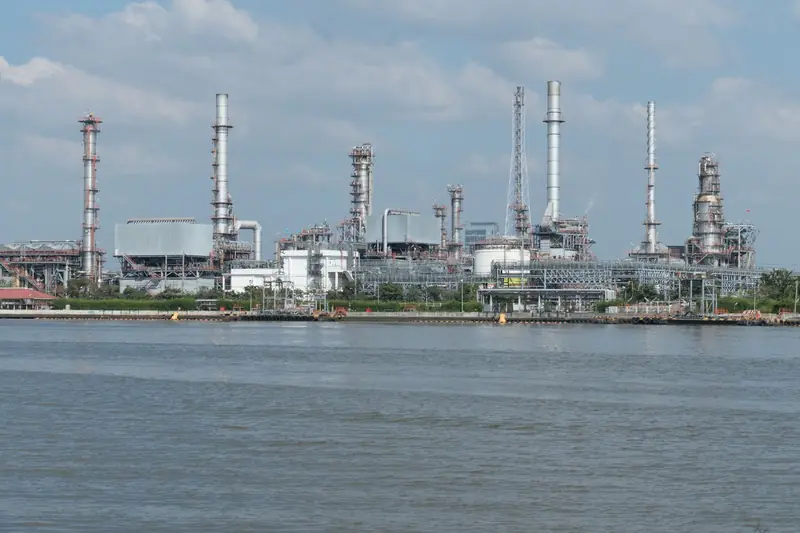
Yanbu is also a refining centre. The Yanbu Aramco Sinopec Refining Company (YASREF) can process 430,000 b/d [5]. The SAMREF refinery has 400,000 b/d of capacity [2]. Aramco's own Yanbu refinery, operating since 1983, has 250,000 b/d [4]. Together that is about 1.08 mb/d, a simple sum of the three.
The refineries have felt the strain on crude supply. Industrial Info Resources (IIR) said SAMREF had cut runs by around half after the September pipeline shutdown and expected reduced rates into October [2]. IIR said YASREF was operating on 16 September, but could face problems from a crude shortage [5]. Saudi Arabia exported about 1.1 mb/d of refined products from its Red Sea ports in the second quarter, mostly to Europe and East Africa [8].
How much crude has Yanbu loaded in 2026?
Loadings rose quickly to the terminals' limits. Kpler says Saudi Red Sea loadings reached 4.3 mb/d in June [1]. S&P Global put Yanbu crude loadings at 3.9 mb/d in the second quarter, more than double a year earlier [8]. Signal Ocean recorded about 4.7 mb/d around 13 July. A shipping source told Asharq Al-Awsat there was "not much more room for higher shipments" [9].
Data
| Kpler | Vortexa (2–8 Mar; early Sep) | S&P Global | |
|---|---|---|---|
| Before the war | 0.75 | – | – |
| Early March | – | 2.72 | – |
| Q2 average | – | – | 3.90 |
| June | 4.30 | – | – |
| August | 1.50 | 3.20 | – |
| September | 2.90 | 3.70 | – |
The naval ban cut visible loadings. Kpler and AXSMarine data showed a fall of at least 30% in the week from 20 July. Kpler put that week at 2.4 to 3 mb/d, against 4.23 mb/d the week before [10]. Vortexa saw loadings broadly stable at 3.8 mb/d. It counted six tankers loading with transponders switched off, about a third of the week's volume [10].
Data providers diverge sharply after July. Vortexa estimated 3.2 mb/d in August and about 3.7 mb/d in early September. Kpler put August at about 1.5 mb/d and September at about 2.9 mb/d [12]. Part of the gap may reflect "dark" loadings, which counts based on ship-tracking signals can miss [10].
Exports stopped when the pipeline was shut on 11 September, after drone attacks that Saudi Arabia blamed on Iraqi militias [13]. Loadings resumed in late September. Trade sources estimated about 2 mb/d. TankerTrackers.com said satellite imagery on 27 September showed nearly 10 million barrels loading at Yanbu and Al Muajjiz [13].
Where do Yanbu cargoes go?
Most Yanbu crude goes to Asia. About 80% of second-quarter loadings headed east of Suez, according to S&P Global [8]. As the ban began, Kpler estimated that about 6 mb/d of crude passed the Bab el-Mandeb to Asia, two-thirds of it Saudi [19]. In March, the record-setting VLCC Kalamos loaded at Yanbu for India's west coast [7].
The ban changed the route, not the market. Lloyd's List Intelligence (LLI) said only one Saudi-linked tanker transited the Bab el-Mandeb between 20 July and mid-September [20]. Cargoes for Asia now sail north through Suez and around Africa. Kpler estimated this lengthens a voyage from Yanbu to South Korea from about 24 days to about 54 [19]. On Commodities at Sea data, the Suez route carried 58% of Saudi flows to Asia in August, against 5% in July [15].
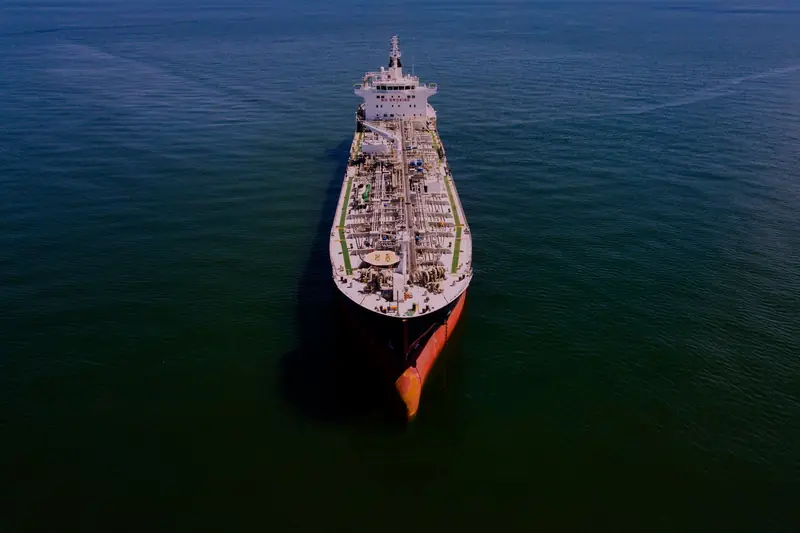
Suez imposes its own limits. Fully laden very large crude carriers (VLCCs) sit too deep for the canal. LLI said ships loading at Yanbu were part-discharging at Ain Sukhna, then topping up at Sidi Kerir through the SUMED pipeline [16]. Some Yanbu crude also moves west to Europe and North America through SUMED [10].
How have Houthi attacks affected Yanbu?
The threat has moved closer to the port since July. On 24 August the Bahri-owned VLCC Amzan was hit by a projectile about 63 nautical miles west of Yanbu. Bahri said the crew was safe; the Houthis said they used a ballistic missile [11]. In late September Saudi Arabia said it had intercepted six ballistic missiles aimed at Yanbu and Taif [2].
On 1 October an unidentified projectile struck inside Yanbu port. It caused a fire and briefly halted loading of a Liberian-flagged tanker, and its source was not established [14].
Insurance costs reflect the risk. War-risk premiums for Saudi-linked tankers loading at Yanbu have tripled to around 3% of vessel value, Reuters reported. In early July they were under 1% [2]. On a $100 million tanker that is roughly $3 million a voyage [2]. The insurers' Joint War Committee also extended its Red Sea listed area about 800 km north, covering Jeddah and Yanbu [16].
How are Yanbu cargoes priced and shipped?
Aramco has kept Yanbu in its term allocations while cutting prices. For September, it set Arab Light for Asia at $2 a barrel below the Oman/Dubai average [17]. Asian buyers were asked to nominate Ras Tanura cargoes, with backup nominations from Yanbu or Sidi Kerir. Aramco said volumes from those ports were limited and only Arab Light was available [17].
For November, Aramco cut Arab Light for Asia to $5 a barrel below Oman/Dubai, a six-year low [18]. Refining sources told Reuters the cut aimed to compensate buyers for elevated freight. Aramco is maintaining allocations for cargoes loading at Yanbu and Sidi Kerir [18]. Kpler put total Saudi crude exports at 6.67 mb/d in September, a seven-month peak [18].
Freight from Yanbu has been among the most expensive in the market. Argus put the Yanbu–Asia rate at about $127 a tonne on 12 March, up 140% from 1 March [7]. The VLCC Kalamos set a record of $770,000 a day on 6 March, the Baltic Exchange said [7]. Platts assessed Yanbu–Far East at $66.87 a tonne on 28 July, up from $32 in early May [8]. Shipbroker Gibson expected Yanbu–Asia freight via Suez and the Cape to rise to the mid-to-high $9 a barrel range [8].
What to watch
- Terminal capacity. Yanbu's terminals, not the pipeline, cap exports at about 4.5–5 mb/d [3].
- Security near the port. The Amzan strike and the 1 October projectile show the risk is now at Yanbu itself [11,14].
- The Suez route. The share of Asia-bound crude moving via Suez and SUMED shows how far the ban is reshaping trade [15,16].
- December prices. Aramco's next OSPs will show whether it keeps compensating Asian buyers for freight [18].
- Insurance. Yanbu war-risk premiums are a direct gauge of how underwriters read the threat [2].
Alupetra follows Saudi export flows, tanker freight and crude prices in its daily market coverage; our price pages are updated every morning.
Free tools for this topic: Crack spread calculator · Historical oil prices · Oil price & unit converter · All tools
Sources
- Kpler — Explainer: how Mideast Gulf crude exports returned to pre-war levels (October 2026). kpler.com (opens in a new tab)
- OilPrice.com — Aramco restores East-West pipeline as war risk closes in on Yanbu (25 September 2026). oilprice.com (opens in a new tab)
- Kpler — Gulf states race to build Hormuz bypass infrastructure (10 July 2026). kpler.com (opens in a new tab)
- Saudipedia — What is the refining capacity of Yanbu Refinery? (12 February 2023). saudipedia.com (opens in a new tab)
- Industrial Info Resources — Saudi Arabia: Yanbu refinery still operating, Industrial Info confirms (17 September 2026). industrialinfo.com (opens in a new tab)
- Lloyd's List — Red Sea tanker loadings rise as Aramco ramps up pipeline contingency (March 2026). lloydslist.com (opens in a new tab)
- Cyprus Shipping News — Yanbu VLCC liftings broaden as freight premiums surge (18 March 2026). cyprusshippingnews.com (opens in a new tab)
- Hellenic Shipping News (S&P Global) — Houthi threat triggers tanker crunch as Saudi oil reroutes (30 July 2026). hellenicshippingnews.com (opens in a new tab)
- Asharq Al-Awsat — Crude shipments from Saudi Arabia's Yanbu port near maximum levels (15 July 2026). english.aawsat.com (opens in a new tab)
- Baird Maritime (Reuters) — Houthi blockade hits Yanbu crude loadings but dark tankers may plug the gap (28 July 2026). bairdmaritime.com (opens in a new tab)
- Al Jazeera — Yemen's Houthis report attack on Saudi oil tanker in Red Sea (24 August 2026). aljazeera.com (opens in a new tab)
- Anadolu Agency — Explainer: what is Saudi Arabia's East-West pipeline and what its precautionary shutdown means (12 September 2026). aa.com.tr (opens in a new tab)
- MarineLink (Reuters) — Yanbu oil loadings resume as pipeline restarts (29 September 2026). marinelink.com (opens in a new tab)
- defenceWeb — Tanker attacks intensify as Saudi–Houthi fighting threatens Bab el-Mandeb (16 October 2026). defenceweb.co.za (opens in a new tab)
- Hellenic Shipping News (S&P Global) — VLCCs avoid Red Sea strait as Houthi threats boost rates amid rising shipping risks (21 September 2026). hellenicshippingnews.com (opens in a new tab)
- Lloyd's List Intelligence — Red Sea Brief: 6 August 2026 (6 August 2026). lloydslistintelligence.com (opens in a new tab)
- Baird Maritime (Reuters) — Saudi Aramco offers cheapest Arab Light crude to Asia since 2020 (6 August 2026). bairdmaritime.com (opens in a new tab)
- Baird Maritime (Reuters) — High delivered premiums fail to deter Asian buyers of Saudi crude (12 October 2026). bairdmaritime.com (opens in a new tab)
- Al Jazeera — Can the Suez save Asian oil consumers after Houthis shut Bab al-Mandeb? (22 July 2026). aljazeera.com (opens in a new tab)
- Lloyd's List Intelligence — Red Sea Brief: 18 September 2026 (18 September 2026). lloydslistintelligence.com (opens in a new tab)
This article is for information only and is not investment, legal or trading advice. Figures are as reported by the sources cited on the date of publication.