Key figures
- 1,200 kmapproximate length of the East-West pipeline from Abqaiq in the Eastern Province to Yanbu on the Red Sea.Anadolu Agency
- 7 millionbarrels a day pumped through Petroline in the first quarter of 2026, an all-time record, against a historical capacity of 5 million.GeoConversation
- 11pumping stations on the line; sources told Argus that three were damaged in the September 2026 drone attack, one significantly.Argus
- 5.8 millionbarrels a day pumped on 6 October 2026, about a month after the pipeline was shut as a precaution.Al Jazeera
- 4.5–5 MbdKpler's estimate of sustainable export capacity at Yanbu's terminals, which it calls the real bottleneck.Kpler
What is the Saudi East-West pipeline and where does it run?
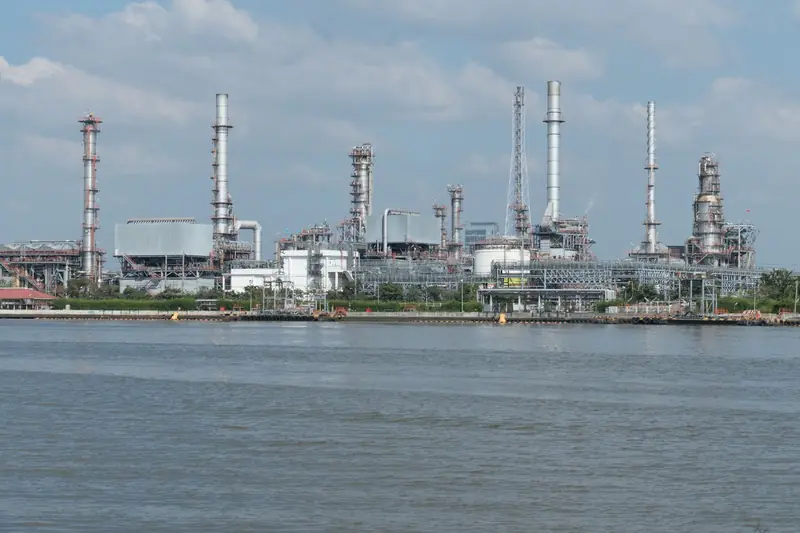
The East-West pipeline, also called Petroline, is operated by Saudi Aramco. It runs about 1,200 km from the Abqaiq processing complex in the Eastern Province to Yanbu on the Red Sea [1]. The whole route lies inside Saudi territory [1]. It was built in 1981 [2], a product of the Iran-Iraq war, when tankers in the Gulf came under attack [3].
According to Global Energy Monitor (GEM), the system has two pipes, of 56 and 48 inches in diameter [4]. GEM lists 11 pumping stations and two breaking stations along the route [4]. Argus also reports 11 pumping stations [5]. A separate Abqaiq–Yanbu natural gas liquids (NGL) line runs alongside, according to the International Energy Agency (IEA). Its 300,000 barrels a day (b/d) of capacity is fully used [6].
The line serves two purposes. It feeds refineries, power plants and desalination plants on the west coast. It also lets Saudi Arabia load crude in the Red Sea instead of the Gulf, avoiding the Strait of Hormuz [1,5].
How has Petroline's capacity grown from 5 to 7 million barrels a day?
GEM says capacity was raised to 5 million barrels a day (mb/d) in 1992 [4]. When drones hit two pumping stations in May 2019, The National still described it as a 5 mb/d line [7]. In July 2019 the then energy minister, Khalid Al Falih, said the kingdom hoped to lift it to 7 mb/d. He said this would take two years [8]. Bloomberg, via World Oil, reported that Aramco had aimed to finish that expansion by September 2019 [9].
The IEA says Aramco reported in March 2025 that capacity had reached 7 mb/d. It added that sustained flows at that level had not been tested [6]. GeoConversation reports that Aramco reached 7 mb/d in the first quarter of 2026 by converting parallel NGL lines to crude service [10].
The next step is under study. On 22 October 2026 chief executive Amin Nasser said engineering studies could take the line from 7 mb/d to 10 mb/d [11]. Aramco is also studying a pipeline to Duqm in Oman, put at about $7 billion; no final decision has been announced [11]. Kpler expects any East-West expansion to be feasible only from 2028 [12].
How much oil has flowed through it in 2026?
Before the war the pipe ran far below capacity. The IEA estimated that about 2 mb/d was being used in early 2026 [6]. Within weeks of the war closing the strait on 28 February, Aramco pushed it to the limit [17]. Bloomberg, via Fortune, reported on 28 March that the line was pumping its full 7 mb/d [3].
Data
| Pipeline flow | |
|---|---|
| Early 2026 (IEA) | 2.0 |
| 28 Mar (Bloomberg) | 7.0 |
| Early Apr, after strike | 6.3 |
| 12 Apr (ministry) | 7.0 |
| August (Kpler) | 2.0 |
| Before Sep attack (Kpler) | 5.5 |
| 11 Sep (shut) | 0.0 |
| 1 Oct (Argus source) | 5.5 |
| 6 Oct (minister) | 5.8 |
The summer was harder. Kpler put August flows at about 2 mb/d, the lowest monthly level since January [2]. Houthi attacks had made the Red Sea route difficult to use [2]. Kpler, cited by OilPrice.com, later said the line was moving roughly 5.5 mb/d just before the September attack [15]. The two estimates suggest a sharp recovery in late August and early September, but the sources do not reconcile them.
After the September shutdown, Energy Minister Prince Abdulaziz bin Salman said pumping resumed within five or six days [14]. The US Energy Information Administration (EIA) dates the partial restart to 22 September [16]. By 1 October flows were back to about 5.5 mb/d, a source told Argus, using a temporary bypass around the worst-hit station [5]. On 6 October the minister said the line was pumping 5.8 mb/d [14].
What attacks has the pipeline faced?
- 14 May 2019Drones hit Dawadmi and Afif pumping stationsLine shut temporarily; Aramco said it was fully operational on 17 May.
- March 2026Strike near the Yanbu refineryRed Sea loadings briefly disrupted; shipments recovered within days.
- Early Apr 2026Pumping station hitFlows cut by about 700,000 b/d; ministry said full capacity was restored on 12 April.
- 10 Sep 2026Drones launched from Iraq hit pumping stationsPipeline shut as a precaution; three of 11 stations damaged, according to Argus sources.
- 22 Sep 2026Partial restartEIA dates the resumption of flows to 22 September.
- 24 Sep 2026Missiles aimed at Yanbu and Taif interceptedSaudi Arabia reported six Houthi ballistic missiles intercepted; no hits reported on Aramco sites.
- 6 Oct 2026Flows at 5.8 mb/dEnergy minister's figure, against a 7 mb/d maximum.
The first attack came on 14 May 2019. Drones struck the Dawadmi and Afif pumping stations, and Aramco said the line was fully operational three days later [7]. Saudi Arabia blamed Yemen's Houthi movement [7].
In 2026 the threats came from several directions. In early April a strike on a pumping station cut flows by 700,000 b/d. The Energy Ministry said full capacity was restored on 12 April [13]. Saudi authorities attributed that strike to Iran, Anadolu reported [1]. In March, a strike near the Yanbu refinery briefly disrupted Red Sea loadings [2].
On 10 September several drones hit the line in the Riyadh and Medina regions [1]. The Saudi Foreign Ministry said they were launched from Iraq [1]. Saudi and Iraqi authorities traced them to Maysan province; an Iraqi armed group denied responsibility, OilPrice.com reported [15]. Kpler said the pipe itself suffered limited damage, with the worst damage at the pumping stations [15]. On 24 September Saudi Arabia said it intercepted six Houthi ballistic missiles aimed at Yanbu and Taif [15].
How much can Yanbu actually export?
The pipe is not the tightest point. Kpler says the binding constraint is the export terminals, where sustainable capacity is about 4.5–5 mb/d [12]. It splits that into roughly 1.5 mb/d at the Yanbu North crude terminal and about 3.0 mb/d at Muajjiz [12]. Any further increase in throughput would first need the loading infrastructure to be debottlenecked [12].
Loadings show the limits. Kpler data put Saudi Red Sea loadings at 0.75 mb/d before the war and 4.3 mb/d in June [17]. They fell to about 1.5 mb/d in August, according to Kpler [1]. Vortexa's estimates were higher, at 3.2 mb/d in August and about 3.7 mb/d in early September [1].
Data
| Red Sea / Yanbu loadings | |
|---|---|
| Before the war | 0.75 |
| June 2026 | 4.30 |
| August 2026 | 1.50 |
| September 2026 | 2.54 |
| 1–25 October 2026 | 2.21 |
Storage is a thin cushion. Sources told Reuters that Yanbu held enough stock for about five to seven days of exports if the pipeline stayed shut [2]. Egyptian storage at Ain Sukhna and Sidi Kerir could add several days [2]. Shipping costs are rising too. War-risk cover for Saudi-linked tankers at Yanbu tripled to about 3% of a vessel's value, Reuters reported via OilPrice.com [15].
How much of the oil stays in Saudi Arabia?
About 2 mb/d of the pipeline's capacity goes to west-coast refineries, according to an Aramco presentation cited by Anadolu [1]. Bloomberg, via World Oil, said that volume supplies refineries in Riyadh, Yanbu and Jizan, plus power and desalination plants [19]. Argus sources put the pre-war figure at 1.5–2 mb/d [5].
That leaves, on paper, about 5 mb/d for export [1]. Domestic demand has varied. Argus said Red Sea refinery runs had been cut in recent weeks [5]. The main reason was the shutdown of the 400,000 b/d Jizan refinery after an attack [5]. The 400,000 b/d SAMREF refinery at Yanbu cut operations by around half after the September disruption [15].
Grade is another limit. The IEA said exports through the Saudi and UAE bypass pipelines were restricted to lighter crude grades. Heavier Saudi barrels were left "effectively locked in" behind Hormuz [20].
What role does Petroline play in bypassing Hormuz?
Only Saudi Arabia and the United Arab Emirates (UAE) have operating crude pipelines that avoid the strait. The IEA estimated their combined available capacity at 3.5–5.5 mb/d before the war [6]. In September 2026, 17% of the region's crude left through the Red Sea, according to Kpler [17].
Saudi Arabia has used the pipeline to reroute some 4 mb/d to Yanbu, about 4% of global supply [14]. The Middle East Economic Survey (MEES), cited by OilPrice.com, estimates it let the kingdom keep roughly 65% of pre-war exports outside the strait [15]. When the line was shut in September, Saudi exports swung back through Hormuz. Kpler says all six Juaymah moorings on the Gulf coast were full within ten days [17].
In October the balance shifted again. Kpler data, cited by Asharq Business, put Saudi crude exports at 5.52 mb/d from 1 to 25 October. Ras Tanura loaded 2.95 mb/d and Yanbu 2.21 mb/d [18].
What to watch
- Repairs and throughput. Argus sources said permanent repairs to the worst-hit station would take weeks [5]. Watch whether flows return to 7 mb/d.
- Yanbu loadings. Terminal capacity of 4.5–5 mb/d, not the pipe, caps Red Sea exports [12].
- Red Sea security. Houthi attacks around Yanbu and the Bab el-Mandeb strait affect the route directly [2,15].
- Expansion decisions. The 10 mb/d study and the Duqm route have no timetable yet [11].
Alupetra follows Gulf export routes, Yanbu loadings and crude prices in its daily market coverage.
Free tools for this topic: Crack spread calculator · Historical oil prices · Statistical price range · All tools
Sources
- Anadolu Agency — Explainer: what is Saudi Arabia's East-West pipeline, and what its 'precautionary' shutdown means (12 September 2026). aa.com.tr (opens in a new tab)
- Al Jazeera (Reuters) — Why Saudi Arabia's East-West pipeline matters for global oil (14 September 2026). aljazeera.com (opens in a new tab)
- Fortune (Bloomberg) — Saudi pipeline to bypass Hormuz hits 7 million barrel goal (28 March 2026). fortune.com (opens in a new tab)
- Global Energy Monitor — East-West Crude Oil Pipeline (updated October 2026). gem.wiki (opens in a new tab)
- Argus — Saudi East-West crude pipeline at 5.5mn b/d: source (1 October 2026). argusmedia.com (opens in a new tab)
- IEA — Strait of Hormuz factsheet (February 2026). iea.blob.core.windows.net (opens in a new tab)
- The National — Aramco confirms resumption of supply along east-west pipeline (17 May 2019). thenationalnews.com (opens in a new tab)
- Gulf News (Reuters) — Saudi Arabia aims to expand pipeline to cut exports via Strait of Hormuz (26 July 2019). gulfnews.com (opens in a new tab)
- World Oil (Bloomberg) — Saudi Aramco to reduce reliance on Hormuz with pipeline expansion (25 July 2019). worldoil.com (opens in a new tab)
- GeoConversation — Saudi Aramco pushes East-West pipeline to all-time throughput record (15 May 2026). geoconversation.org (opens in a new tab)
- Middle East Observer — Saudi Aramco studies new oil export routes, eyes 10m-bpd pipeline capacity (29 October 2026). meobserver.news (opens in a new tab)
- Kpler — New pipelines bypassing the Strait of Hormuz could come online in 1–2 years (10 July 2026). kpler.com (opens in a new tab)
- Al Jazeera — Saudi Arabia says key oil pipeline back to full capacity after attacks (12 April 2026). aljazeera.com (opens in a new tab)
- Al Jazeera — Saudi Arabia says East-West pipeline pumping 5.8 million bpd (6 October 2026). aljazeera.com (opens in a new tab)
- OilPrice.com — Aramco restores East-West pipeline as war risk closes in on Yanbu (25 September 2026). oilprice.com (opens in a new tab)
- EIA — Short-Term Energy Outlook: global oil markets (6 October 2026). eia.gov (opens in a new tab)
- Kpler — Explainer: how Mideast Gulf crude exports returned to pre-war levels (October 2026). kpler.com (opens in a new tab)
- Egypt Oil & Gas — Saudi oil exports exceed 5.5 mmbbl/d in October despite attack (26 October 2026). egyptoil-gas.com (opens in a new tab)
- World Oil (Bloomberg) — Saudi Arabia ramps Yanbu exports toward 5 MMbpd as Hormuz disruption forces rerouting (25 March 2026). worldoil.com (opens in a new tab)
- IEA — Oil Market Report (14 April 2026). iea.blob.core.windows.net (opens in a new tab)
This article is for information only and is not investment, legal or trading advice. Figures are as reported by the sources cited on the date of publication.