Key figures
- 29,158 TLaverage price of a tonne of urea in Türkiye in September 2026, up 6.7% on August and 13.7% on a year earlier, according to farm-union data.TZOB, via TarımTR
- 33.07%annual rise in the fertiliser and soil improver group of TÜİK's agricultural input price index in July 2026, the steepest of any group.Trend News Agency
- 954,092 tonnesurea imported from Oman in 2025, about 38.1% of Türkiye's urea imports, according to TurkStat data.Türkiye Today
- 18.61%average increase in BOTAŞ gas prices for industrial consumers from 4 April 2026.GMK Center
- 403 TLbasic support per decare for wheat, barley and grain maize for the 2026 production year, which replaces separate diesel and fertiliser payments.Tarımdan Haber
How much has the world urea price moved in 2026?
The World Bank tracks urea in its monthly Pink Sheet, using spot prilled urea free on board (f.o.b.) in the Middle East [1]. The series averaged $422.7 a tonne in 2025 [1]. It rose to $725.6 in March 2026 and $856.9 in April, after the war that began on 28 February disrupted Gulf shipments [1,17].
The World Bank said urea in April was up 80% since February and at its highest since April 2022 [2]. It also noted that the Strait of Hormuz handles nearly a quarter of global urea exports [2]. The spike did not last. The monthly price fell to $453.1 in June and $390 in August, before edging up to $407.5 in September [1].
Data
| Urea (World Bank Pink Sheet) | |
|---|---|
| Jan 25 | 380.5 |
| Feb 25 | 436.5 |
| Mar 25 | 394.5 |
| Apr 25 | 386.9 |
| May 25 | 392.0 |
| Jun 25 | 420.5 |
| Jul 25 | 496.0 |
| Aug 25 | 507.7 |
| Sep 25 | 461.1 |
| Oct 25 | 394.4 |
| Nov 25 | 409.3 |
| Dec 25 | 392.5 |
| Jan 26 | 415.4 |
| Feb 26 | 472.0 |
| Mar 26 | 725.6 |
| Apr 26 | 856.9 |
| May 26 | 770.5 |
| Jun 26 | 453.1 |
| Jul 26 | 400.0 |
| Aug 26 | 390.0 |
| Sep 26 | 407.5 |
Quarterly averages show the same arc: $537.7 in the first quarter, $693.5 in the second and $399.2 in the third [1]. In its October outlook, the World Bank forecasts an average of $510 a tonne for 2026, $429 for 2027 and $368 for 2028 [3]. In April it had expected $675 for 2026 [3].
What do TÜİK's input price figures show for fertiliser?
The Turkish Statistical Institute (TÜİK) publishes an agricultural input price index (Tarım-GFE) with a lag of about seven weeks; March data came out on 20 May [4]. Fertiliser prices led its rise in the spring. In March, the fertiliser and soil improver group was 48.33% higher than a year earlier and up 9.69% on the month [4]. The annual rise reached 62.77% in April [5] and 63.56% in May [6].
The pace then slowed as world prices fell. The group's annual increase eased to 50.99% in June [7] and 33.07% in July [8]. It was still the fastest-rising group in July, while the overall index rose 27.62% [8].
The August data, released on 19 October, show a new driver. The overall index rose 3.41% on the month and 30.28% on the year [9]. Energy and lubricants led, up 9.58% on the month and 43.14% on the year [9]. Fertilisers posted the smallest monthly rise, at 0.59% [9].
What are Turkish farmers paying for urea?
Two sets of retail figures are widely reported: list prices from Tarım Kredi, the agricultural credit cooperative network, and a farm-union survey [10,13]. Tarım Kredi raised its urea price five times in ten days after the war began [10]. By 10 March a tonne cost 29,900 lira (TL), 11.15% more than on 28 February [10]. On 6 April it rose again, from 32,200 TL to 33,900 TL [11].
In June the cooperative cut the price by 1,500 TL to 31,200 TL a tonne [12]. It offered a "buy now, pay at harvest" scheme for purchases made by 30 June, with payment due by 30 September [12].
The Union of Turkish Chambers of Agriculture (TZOB) collects prices through local chambers. Its survey put urea at 29,158 TL a tonne in September, up from 27,330 TL in August [13]. That is a 6.7% monthly rise and 13.7% more than a year earlier [13]. Other fertilisers rose faster on the year. Diammonium phosphate (DAP) reached 48,356 TL, up 35.9%, and 26% ammonium nitrate reached 23,040 TL, up 69.2% [13].
The lira urea price is therefore climbing again while the dollar price is far below its spring peak [1,13]. The sources do not break down how much of the difference reflects the exchange rate, freight or dealer margins.
Where does Türkiye's urea come from?
Türkiye relies heavily on imported urea. TurkStat data cited by Türkiye Today put 2025 urea imports at 2.5 million tonnes, worth $1 billion [14]. Oman was the largest supplier, with 954,092 tonnes, followed by Egypt with 617,600 tonnes [14]. Qatar and the United Arab Emirates (UAE) together supplied about 135,484 tonnes [14].
Trade estimates relayed by UkrAgroConsult give a different split. They put 2025 imports at about 2.7 million tonnes, with roughly 44% of Iranian origin, often recorded as Oman, 24% from Egypt and 13% from Russia [15]. Turkmenistan and Uzbekistan together supplied around 300,000 tonnes [15].
The wider sector is also import-dependent. More than 90% of chemical fertiliser inputs come from abroad, Hürriyet Daily News reported in April [16]. Domestic plants have more than 8 million tonnes of annual capacity across 17 facilities, but run at 60% to 70% and produce 4.5 to 5 million tonnes [17]. Farmers use about 7 million tonnes a year, with imports covering the rest [17].
How did Ankara respond to the supply shock?
The government removed the 6.5% import duty on urea by presidential decree on 7 March [15]. Egypt, Qatar and Malaysia had already been exempt [15]. Türkiye Today reported that daily fertiliser demand through Gübretaş's cooperative channel doubled to 20,000 tonnes, from about 10,000 tonnes, as farmers bought ahead [14].
Ankara also turned to Russia. Imports of urea, ammonia and sulphur from the Gulf stopped after the strait closed, and Russia imposed export restrictions and quotas in March [17]. A memorandum between the two agriculture ministries now sets special terms for Türkiye on nitrogen and phosphate fertilisers and ammonia, aimed at spring demand [17].
How do gas costs feed into fertiliser prices?
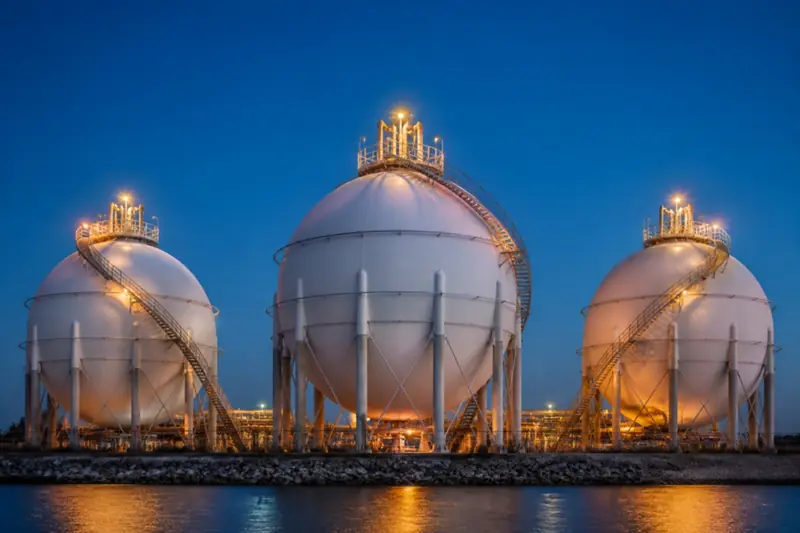
Natural gas is the main feedstock for ammonia and urea. It makes up 80% to 90% of production costs, according to Hürriyet Daily News [16]. In Türkiye, BOTAŞ, the state gas company, sets regulated tariffs. Its prices for industrial consumers rose by an average of 18.61% from 4 April 2026, and by 19.42% for power plants [18].
European gas prices, a reference for many importers, have also climbed. The World Bank's Europe gas price averaged $25.42 per million British thermal units (mmbtu) in September 2026, against $11.96 in 2025 [1]. Its October outlook forecasts an average of $19.0 in 2026 [3].
What does it mean for the 2026/27 wheat sowing?
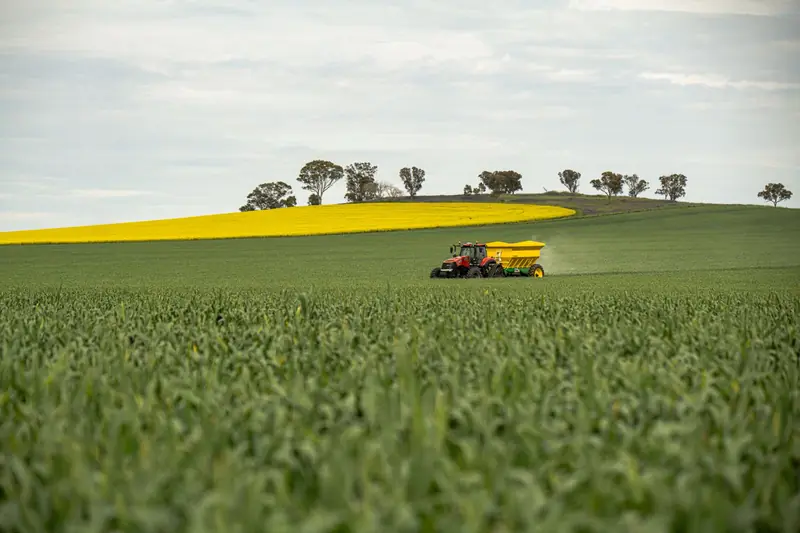
TZOB's September data show diesel at 94.60 TL a litre, up 70.7% on the year, alongside the fertiliser increases [13]. TarımTR noted that the rises came as wheat sowing and new-season preparations were under way in October [13].
Some farm leaders say margins are thin. Sezai Çelik, president of the İnegöl Chamber of Agriculture, told Yıldırım Gazetesi that "farmers cannot sow under these conditions" without a new support model [19]. He cited diesel at 101 lira and fertiliser prices of 1,500 to 2,700 lira, without naming a product [19].
Direct aid comes through the basic support scheme. From 2026, diesel and fertiliser support is paid as basic support, covering about 50% of diesel cost and about 25% of fertiliser cost, according to Tarımdan Haber [20]. The rate for wheat, barley and grain maize is 403 TL per decare, and basic and planned production support payments of 81 billion TL began on 6 March [20].
What to watch
- Lira and dollar prices. World urea is far below its April peak, but TZOB data show lira prices rising again in September [1,13].
- World forecasts. The World Bank expects urea to average $429 a tonne in 2027, down from $510 in 2026 [3].
- Gas tariffs. Any further BOTAŞ change would affect domestic producers' costs [18].
- Russian supply. The new memorandum is meant to secure nitrogen and ammonia volumes [17].
- Input inflation. Fertiliser and energy remain among the fastest-rising input costs in TÜİK's index [8,9].
Alupetra tracks fertiliser and energy markets daily; our urea price page charts the World Bank's monthly series alongside gas and crude benchmarks.
Free tools for this topic: Gas & LNG converter · Oil price & unit converter · All tools
Sources
- World Bank — Commodity Price Data (The Pink Sheet) (2 October 2026). thedocs.worldbank.org (opens in a new tab)
- World Bank Data Blog — Fertilizer prices surge as Strait of Hormuz disruptions tighten supplies (14 May 2026). blogs.worldbank.org (opens in a new tab)
- World Bank — Commodity Markets Outlook: October 2026 forecasts (October 2026). thedocs.worldbank.org (opens in a new tab)
- Hürriyet Daily News — Agricultural input prices in Türkiye rise 34.3 percent annually in March (20 May 2026). hurriyetdailynews.com (opens in a new tab)
- Trend News Agency — Türkiye's agricultural input prices jump 38.97% year-on-year in April 2026 (29 June 2026). trend.az (opens in a new tab)
- Foreks — Tarımsal girdilerde en yüksek fiyat artışı gübrede (20 July 2026). foreks.com (opens in a new tab)
- Hisse.net — Tarımsal girdide gübre fiyatları uçtu (20 August 2026). hisse.net (opens in a new tab)
- Trend News Agency — Türkiye's farm input costs growth slows to 27.6% in July (25 September 2026). trend.az (opens in a new tab)
- İlkses — Tarımsal girdilerde artış: en yüksek yükseliş enerjide (19 October 2026). ilkses.com.tr (opens in a new tab)
- Tarımdan Haber — Tarım Kredi'den gübreye 5'inci zam: ton başına yeni fiyatlar (10 March 2026). tarimdanhaber.com (opens in a new tab)
- Tarımdan Haber — 6 Nisan 2026 güncel gübre fiyatları: üre, DAP ve sülfat (6 April 2026). tarimdanhaber.com (opens in a new tab)
- Tarımdan Haber — Tarım Kredi'den üre gübresinde kampanya: ton fiyatı 31.200 TL (9 June 2026). tarimdanhaber.com (opens in a new tab)
- TarımTR — Tarımsal girdilerde yeni tablo: mazot, gübre ve yem fiyatları eylülde ne kadar arttı? (6 October 2026). tarimtr.com (opens in a new tab)
- Türkiye Today — Türkiye drops urea tariffs to shield farmers from fertilizer shock (8 March 2026). turkiyetoday.com (opens in a new tab)
- UkrAgroConsult — Turkey lifts import duty on urea, boosting market competition (16 March 2026). ukragroconsult.com (opens in a new tab)
- Hürriyet Daily News — War puts Turkish farmers in a 'low yield or high cost' dilemma (7 April 2026). hurriyetdailynews.com (opens in a new tab)
- HortiDaily — Turkey plans to ease fertilizer supply constraints through additional imports (11 September 2026). hortidaily.com (opens in a new tab)
- GMK Center — Electricity and gas rates have increased in Turkey since April 4 (6 April 2026). gmk.center (opens in a new tab)
- Yıldırım Gazetesi — Sezai Çelik'ten buğday ekimi öncesi destek çağrısı (18 September 2026). yildirimgazetesi.com (opens in a new tab)
- Tarımdan Haber — 2026 mazot ve gübre desteği takvimi belli oldu (3 March 2026). tarimdanhaber.com (opens in a new tab)
This article is for information only and is not investment, legal or trading advice. Figures are as reported by the sources cited on the date of publication.