Key figures
- 750,000 b/dexport capacity under the one-year Iraq–Türkiye pipeline agreement signed on 1 August 2026.Enerdata; Shafaq News
- ~220,000 b/dcrude from Kirkuk and the Kurdistan Region flowing to Ceyhan in early September 2026.Shafaq News
- 18.9 million tonnesoil carried by the Baku–Tbilisi–Ceyhan pipeline in January–September 2026, 18% of it from Kazakhstan and Turkmenistan.APA
- 161 million m³/dayTürkiye's LNG regasification capacity in July 2026, up from 34 million m³/day in 2016.Turkish Ministry of Energy
- 3.7 million b/doil moving through the Turkish Straits in the first half of 2025, about 5% of global maritime oil trade.US EIA
Why does Türkiye matter more as an energy hub in 2026?
Türkiye's role as an energy hub rests on geography. Crude pipelines from Iraq and the Caspian end at the Mediterranean port of Ceyhan. Gas arrives by pipeline from Russia, Azerbaijan and Iran and by sea as liquefied natural gas (LNG). The Turkish Straits link Black Sea exporters to world markets. The 2026 Gulf war has made routes that avoid the Strait of Hormuz more valuable.
Data from the International Energy Agency (IEA) show the shift. Total oil flows through Hormuz recovered to 10.9 million barrels per day (b/d) in September. Bypass exports, mainly through Saudi Arabia's East–West pipeline to the Red Sea, rose by 970,000 b/d to 5.6 million b/d [1]. That bypass is itself exposed. The IEA cited the 11 September bombing of the East–West pipeline as a factor in the late-September price rally [1]. On 26 October Yemen's Houthis claimed new attacks on its pumping stations, which Saudi Arabia had not confirmed [2].
Iraq has fewer options. Before the war, about 95% of its crude exports passed through Hormuz [3]. Oil Minister Basim Mohammed said Iraq shipped only 10 million barrels through the strait in April, against about 93 million barrels a month before the war [4]. The northern pipeline to Ceyhan gives Iraq an alternative to its southern terminals [3].
What is in the 2026 Kirkuk–Ceyhan pipeline deal?
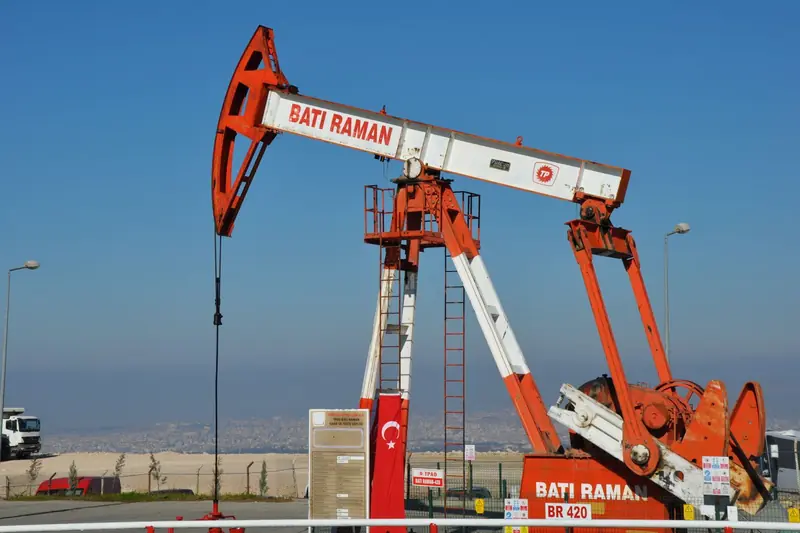
The Kirkuk–Ceyhan line, also called the Iraq–Türkiye Pipeline, operates under a 1973 agreement. The agreement was renewed in 2010 for 15 years and expired on 27 July 2026 [5]. The system's nameplate capacity is about 1.5 million b/d [6]. Flows stopped in March 2023 after an International Chamber of Commerce (ICC) arbitration ruling ordered Türkiye to pay Iraq about $1.5 billion over exports in 2014–2018 [5]. They restarted in September 2025 [7].
On 1 August 2026 the two countries signed a one-year interim agreement [3]. The parties are Türkiye's state pipeline company BOTAŞ and Iraq's State Oil Marketing Company (SOMO) and North Oil Company. The deal secures 750,000 b/d of transit capacity and is meant to bridge talks on a wider partnership covering oil, electricity and water [6]. Iraqi reports describe 750,000 b/d as a minimum volume [3,8]. On 3 October Iraq's oil minister said in Ankara that the sides had advanced a draft agreement on Ceyhan exports and formed two technical committees, on oilfield investment and oil infrastructure [8].
Actual flows are well below that capacity. Shafaq News, citing Iraqi oil sources, reported on 13 August that northern exports had fallen to about 130,000 b/d from nearly 300,000 b/d a month earlier. Output had been suspended at several Kurdistan fields, and about 90,000 b/d of Basra crude routed north through Kirkuk had stopped [4]. By 7 September exports were back at about 220,000 b/d: some 150,000 b/d from Kirkuk and 70,000 b/d from the Kurdistan Regional Government (KRG) [3].
Can a Basra–Ceyhan pipeline bypass Hormuz?
Filling the deal's capacity depends on moving southern crude north. In April, IEA Executive Director Fatih Birol proposed a new pipeline from Basra's fields to Ceyhan. Iraqi News reported him calling it "extremely attractive and highly important for Iraq, Turkey, and European energy security" [9].
An analysis by the Centre for Trade and Economic Studies (TREC), reported by Iraq Business News, outlined a route from Rumaila and other Basra fields north through Haditha, Baiji and Fishkhabur, then via Silopi to Ceyhan, with capacity of about 1.5 million b/d. The Turkish section alone would run about 650 km. TREC listed financing, a stable legal framework and security on the Iraqi section among the challenges [10].
Iraq has begun with the first link. In May it announced work on a 700 km Basra–Haditha pipeline with capacity of 2.5 million b/d. About $1.5 billion has been allocated, and completion depends on further budget allocations [11]. From Haditha, crude could feed routes to Ceyhan, Baniyas in Syria and Aqaba in Jordan. The National described the one-year deal as a prelude to a wider agreement to raise export capacity above 1 million b/d once the Basra–Haditha–Kirkuk–Ceyhan system is complete [11].
How much oil reaches Ceyhan through the BTC pipeline?
Ceyhan is also the terminal for the Baku–Tbilisi–Ceyhan (BTC) pipeline. It runs 1,768 km from Azerbaijan through Georgia to Türkiye and has a capacity of 1.2 million b/d. BOTAŞ International operates the Turkish section [12]. From June 2006 to the end of September 2024, 5,786 tankers loaded about 4.4 billion barrels of BTC crude at Ceyhan [12].
In January–September 2026, BTC carried 18,856.8 thousand tonnes of oil. Azerbaijani crude made up 82%, and oil from Turkmenistan and Kazakhstan 18% [13]. Kazakhstan shipped more than 1 million tonnes through BTC in January–August, up 12% on a year earlier, according to KazTransOil [14]. That gives Kazakhstan an outlet that avoids the Black Sea, where it ships crude from the Caspian Pipeline Consortium (CPC) terminal at Novorossiysk through the Turkish Straits [7].
Is Türkiye becoming a natural gas hub?
Türkiye uses 50–60 billion cubic metres (bcm) of gas a year and produces only about 4% of it [15]. Russian gas, delivered through the Blue Stream and TurkStream pipelines, makes up about 35% of the gas mix. Türkiye imported 7.6 bcm from Iran in 2025, about 13% of its total gas imports. That came under a 9.6 bcm-a-year contract due to expire in July 2026. In April the energy minister said no talks on an extension were under way [16].
TurkStream also carries Russian gas onwards. It has been the only route for Russian pipeline gas to Europe since Ukraine's transit deal lapsed in January 2025. Reuters calculations based on Entsog grid data put flows at 51.9 million m³/day in August 2026, and at about 11.9 bcm in January–August, up 3.5% year on year [17]. The Trans-Anatolian Natural Gas Pipeline (TANAP) had moved 99.6 bcm of Azerbaijani gas by 30 June 2026, of which 39.6 bcm went to Türkiye [18].
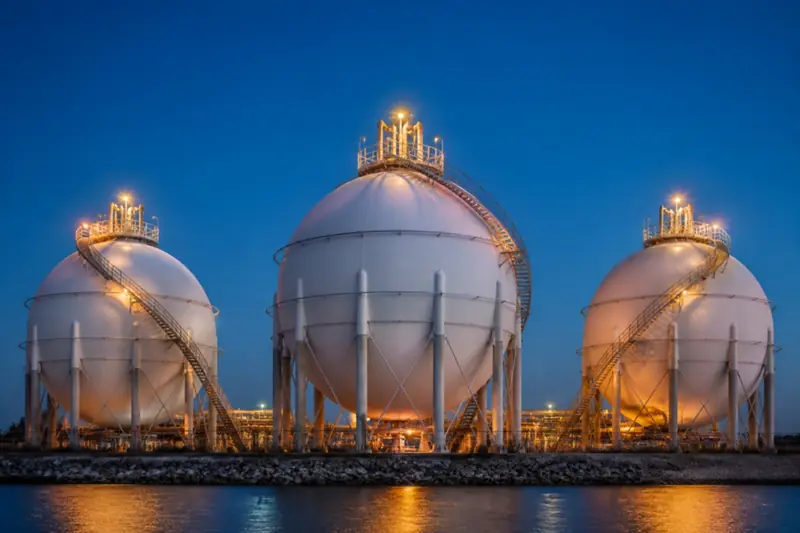
LNG imports are rising. Türkiye imported 12.38 million tonnes (Mt) of LNG in 2025, about 17 bcm. Between 1 January and 6 May 2026 it imported 6.90 Mt, against 6.57 Mt a year earlier [15]. National regasification capacity has risen to 161 million m³/day across five entry points: two onshore terminals and three floating storage and regasification units (FSRUs). The ministry plans to reach 200 million m³/day with two more FSRUs. BOTAŞ is also building a fourth storage tank at its Marmara Ereğlisi terminal [19].
Türkiye already re-exports pipeline gas to Bulgaria, Slovakia and Moldova. DEPA won a Bulgargaz tender for 1 terawatt-hour of LNG, to be regasified at Marmara over summer 2026 and delivered to Bulgaria [15].
What moves through the Bosphorus and the Turkish Straits?
The Turkish Straits are the Bosphorus (Istanbul Strait) and the Dardanelles (Çanakkale Strait). They carried an estimated 3.7 million b/d of crude and products in the first half of 2025, about 60% of it crude [7]. Kazakhstan is the largest exporter through the Straits. Türkiye does not allow LNG carriers through the Bosphorus for safety reasons, so cargoes for the Marmara terminal enter through the Dardanelles [7].
Traffic has held broadly steady in 2026 despite drone attacks in the Black Sea. Türkiye's Directorate General of Maritime Affairs counted 40,218 vessel transits of the two straits in the first half of 2026, including 19,277 through the Istanbul Strait. That compared with 40,988 a year earlier [20].
What to watch
- Iraq–Türkiye talks: whether the draft framework becomes a long-term agreement within the interim deal's one-year term.
- Northern flows: whether exports to Ceyhan rise towards 750,000 b/d.
- Basra–Haditha: funding and construction of the first link in a southern route.
- Gulf bypass security: attacks on the East–West pipeline and the Red Sea route.
- Gas supply: Iranian flows after the contract's expiry date, and new FSRU capacity.
Alupetra follows Ceyhan loadings and Turkish Straits traffic from its offices in Istanbul, London and Dubai.
Sources
- IEA — Oil Market Report, October 2026 (14 October 2026). iea.org (opens in a new tab)
- OilPrice.com — Houthis Claim Attacks on Saudi Arabia's East-West Oil Pipeline (26 October 2026). oilprice.com (opens in a new tab)
- Shafaq News — Northern Iraq oil exports hold at 220,000 bpd (7 September 2026). shafaq.com (opens in a new tab)
- Shafaq News — Kirkuk-Ceyhan oil exports fall to around 130,000 bpd (13 August 2026). shafaq.com (opens in a new tab)
- Turkish Minute — Turkey, Iraq to sign one-year deal to keep Ceyhan oil pipeline open: minister (10 July 2026). turkishminute.com (opens in a new tab)
- Enerdata — Türkiye and Iraq extend Kirkuk-Ceyhan oil pipeline agreement by one year (4 August 2026). enerdata.net (opens in a new tab)
- US EIA — World Oil Transit Chokepoints (updated 3 March 2026). eia.gov (opens in a new tab)
- Shafaq News — Iraq, Turkiye advance draft Ceyhan oil export deal (3 October 2026). shafaq.com (opens in a new tab)
- Iraqi News — IEA chief proposes Basra-Ceyhan pipeline as Hormuz crisis reignites (19 April 2026). iraqinews.com (opens in a new tab)
- Iraq Business News — Basra-Ceyhan Pipeline Proposal Back Under Consideration (27 April 2026). iraq-businessnews.com (opens in a new tab)
- The National — Iraq to sign extension of pipeline deal with Turkey (1 August 2026). thenationalnews.com (opens in a new tab)
- bp Azerbaijan — Baku-Tbilisi-Ceyhan pipeline (company page, data to end-September 2024). bp.com (opens in a new tab)
- APA — Volume of oil transported via BTC this year announced (16 October 2026). en.apa.az (opens in a new tab)
- Interfax-Kazakhstan — Kazakhstan boosts BTC oil route shipments 12% as CPC uncertainty persists (9 September 2026). m.interfax.kz (opens in a new tab)
- S&P Global Energy — Turkish gas and LNG imports grow, targets to become a regional gas hub (6 May 2026). spglobal.com (opens in a new tab)
- Pipeline & Gas Journal (Reuters) — Turkey-Iran gas pipeline deal nears expiry as supply talks stall (18 April 2026). pgjonline.com (opens in a new tab)
- Pipeline & Gas Journal (Reuters) — TurkStream gas flows to Europe climb 3% in August as sole Russian transit route (3 September 2026). pgjonline.com (opens in a new tab)
- APA — Nearly 100 bcm of Azerbaijani gas transported via TANAP to date (30 June 2026). en.apa.az (opens in a new tab)
- Republic of Türkiye Ministry of Energy and Natural Resources — Storage Capacity to Increase at the Marmaraereğlisi LNG Terminal (13 July 2026). enerji.gov.tr (opens in a new tab)
- Daily Sabah (Anadolu Agency) — Over 40,000 ships transit Turkish Straits in 1st half of 2026 (4 August 2026). dailysabah.com (opens in a new tab)
This article is for information only and is not investment, legal or trading advice. Figures are as reported by the sources cited on the date of publication.