Key figures
- USD 3.4 trillionglobal energy investment the IEA expects in 2026, up 5% on 2025, with clean energy at USD 2.2 trillion.IEA World Energy Investment 2026
- 3.5–5.5 mb/dthe IEA's estimate of spare capacity on the Saudi and UAE pipelines that can bypass the Strait of Hormuz.IEA
- ~1.1 billion barrelsemergency oil stocks IEA members still held on 7 October, including more than 200 million barrels of diesel.The National
- 140 bcmthe IEA's estimate of cumulative LNG supply lost in 2026–2030, including damage at Qatar's Ras Laffan.IEA Gas Market Report, Q3-2026
- $39 billionthe extra amount LNG importers will spend in 2026, while buying 60.7 million tonnes less.Rystad Energy, via OilPrice.com
Why is energy security back at the top of the agenda?
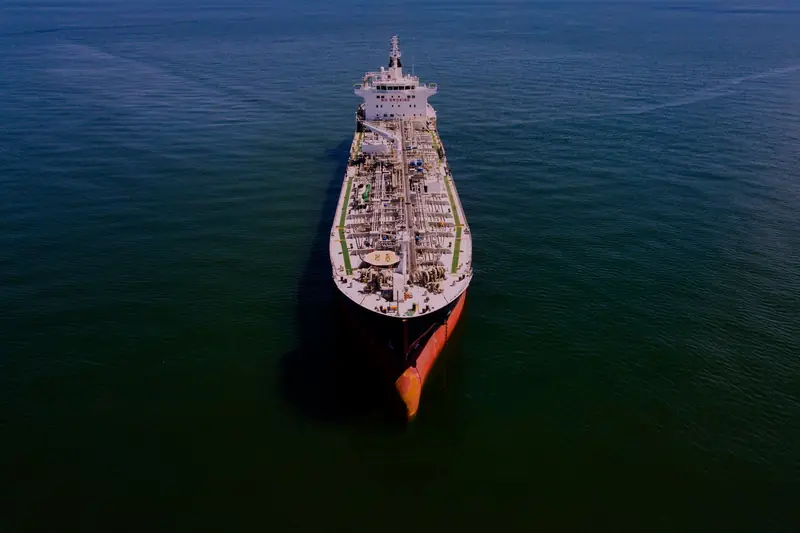
Energy security has returned to the centre of energy policy and investment in 2026. Fatih Birol, Executive Director of the International Energy Agency (IEA), has described the combined impact of the Middle East war as "the greatest threat to global energy security in history" [1]. In 2025 about a quarter of seaborne oil trade and about 20% of global liquefied natural gas (LNG) supply passed through the Strait of Hormuz [1].
The pressure has not eased. Speaking at Singapore International Energy Week on 26 October, Birol said he did not see "any credible pathway" for markets to return to pre-war conditions next year. He noted that oil prices were "flirting with $120 a barrel" [2].
Governments and companies are responding in four main ways: investment, new export routes, strategic stocks and more diverse LNG supply.
What does the IEA's World Energy Investment 2026 report say?
The IEA published World Energy Investment 2026 on 28 May, three months into the conflict. The report examines investment trends "in light of the ongoing energy crisis stemming from the conflict in the Middle East" [3].
Its headline estimate is that capital flows to the energy sector will grow to USD 3.4 trillion in 2026, a 5% rise from 2025, driven mainly by China, the US and the EU. The IEA says this growth comes "despite the destabilising effect of the Middle East conflict" [4].
Clean energy investment is expected to reach USD 2.2 trillion, almost double the amount going to fossil fuels. It rises by 7% year on year in advanced economies and China, and by 4% in other emerging markets. The IEA describes this as "reflecting regional differences with a shared focus on energy security" [4].
Is upstream oil and gas investment responding?
Signals from producers and service companies are mixed.
Repairing damaged assets is one driver. On 5 April the eight OPEC+ countries with voluntary cuts warned that "restoring damaged energy assets to full capacity is both costly and takes a long time" [5]. On 23 October the oilfield services company SLB reported that its Middle East revenue rose 13% on the prior period, as activity recovered in Iraq, Kuwait, Oman, Saudi Arabia, Qatar and the UAE. Chief executive Olivier Le Peuch said "energy security and supply shocks continue to drive a quest for international supply diversification" [6].
In the US, higher prices have not yet led to a surge in spending. The Federal Reserve Bank of Dallas's third-quarter survey, published on 30 September, found that the capital spending index for exploration and production (E&P) firms fell to 35.3 from 42.7. The index for expected spending next year rose to 17.1 from 0.0. One executive said companies should budget at $65–70 a barrel because of steep backwardation, where futures prices sit below spot [7].
Producers also expect demand for restocking. OPEC forecasts 2027 demand growth of 2.55 million barrels per day (mb/d), which it says will be "bolstered next year by the need to replenish oil inventories at large" [8]. In Singapore, Saudi Energy Minister Prince Abdulaziz bin Salman said energy security "requires more resilient systems, sustained investment, and trusted partnerships" [9].
Which export routes bypass the chokepoints?
According to the IEA, only Saudi Arabia and the UAE have operational crude pipelines that can bypass Hormuz, with an estimated 3.5–5.5 mb/d of spare capacity. There is no alternative route for Qatari and Emirati LNG [1].
These routes have carried much of the load. Using its 1.8 mb/d Habshan–Fujairah pipeline, the 42-million-barrel Mandous storage complex and transits along the Omani coast, the UAE lifted exports to 4.3 mb/d by early June, almost 85% of pre-war levels [10]. Combined exports from Yanbu in Saudi Arabia and Fujairah in the UAE rose from 4.1 mb/d in February to 7.8 mb/d in June. They fell to 5.5 mb/d in August after Houthi attacks in the Red Sea, and attacks shut Saudi Arabia's East–West pipeline to Yanbu in early September. By 18 September, bypass flows had offset more than 500 million barrels of lost Hormuz exports [11].
The route remains exposed. OilPrice.com reported on 26 October that flows on the East–West pipeline had been raised to 5.8 mb/d in recent weeks. The same day the Houthis claimed attacks on its pumping stations, which Saudi Arabia had not confirmed [12].
More capacity is planned. The US Energy Information Administration (EIA) expects new bypass pipeline capacity in the UAE to come online in 2027 [13], and Aramco is studying additional crude export routes [9]. In Canada, Trans Mountain is pursuing projects that could add up to 300,000 b/d to its 890,000 b/d pipeline to the Pacific coast. The governments of Alberta and Canada also plan a new oil pipeline to British Columbia's west coast [14].
How are strategic stocks being used and rebuilt?
IEA members must hold emergency stocks equal to at least 90 days of net imports. On 11 March they agreed to make 400 million barrels available, the largest release in the agency's history [1]. By 7 October about 325 million barrels had been released, and members still held about 1.1 billion barrels. Once its current drawdown is complete, the US Strategic Petroleum Reserve (SPR) is projected to fall to its lowest level since 1982 [15].
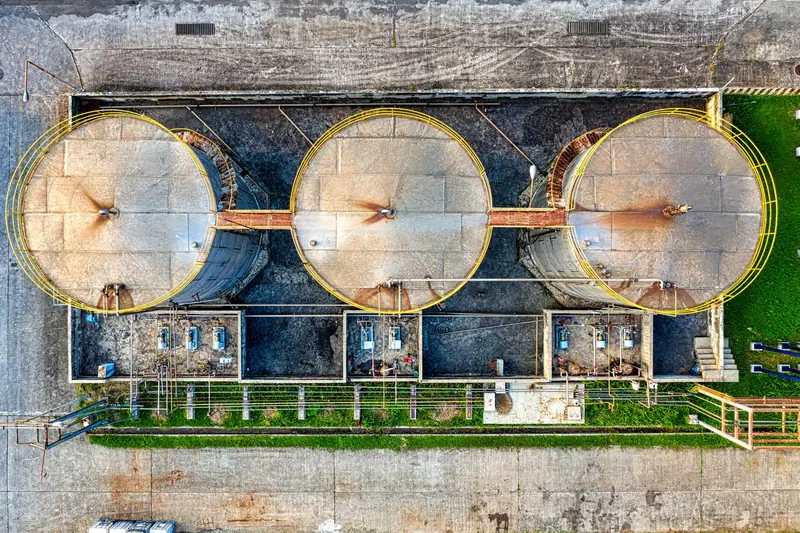
Commercial buffers are thin too. Rigzone reported on 26 October that Aramco chief executive Amin Nasser told the World Petroleum Congress in Riyadh that commercial onshore inventories are "well below six billion barrels, and they are the last available buffer". He said refilling them while meeting demand could take up to two years [9].
Storage is also moving closer to consumers. On 26 October Saudi Arabia and Singapore announced plans to store Saudi crude at the Jurong Rock Caverns, with operations expected to begin in the second half of 2027 [9]. The IEA's ASEAN Energy Security Review, published on 6 October, lists "expanding strategic stocks, investing in infrastructure, and improving demand-side flexibility" among the options for Southeast Asia [16].
The same approach now extends to gas. In a report published on 9 September, the IEA suggested that governments jointly explore "new voluntary reserve mechanisms" for gas, alongside greater market flexibility [17].
How are LNG buyers diversifying supply?
In 2025 about 93% of Qatar's LNG exports and 96% of the UAE's passed through Hormuz [1]. In July the IEA forecast that combined Qatari and Emirati LNG supply would fall by about 45%, or 54 billion cubic metres (bcm), in 2026. Non-Gulf output rose by nearly 18% (about 27 bcm) between March and June, offsetting roughly three-quarters of the Gulf decline [18].
New supply is being sanctioned. The IEA reported that three US projects had reached a final investment decision (FID) since March: CP2 Phase 2, Delfin LNG and Commonwealth LNG [18]. On 28 September the LNG Canada partners took FID on a second phase of two 7 million tonnes per annum (Mtpa) trains. Ksi Lisims in Canada aims for FID by the end of 2026, and the first phase of the Sabine Pass expansion in early 2027 [19].
Buyers are paying for the shift. Rystad Energy estimates that LNG importers will spend at least $39 billion more in 2026 while buying 60.7 million tonnes less. Europe, which buys around 65% of its LNG on the spot market, faces the largest increase. Rystad advises importers to diversify supply origins and routes and to favour "unchokeable" supply that avoids maritime chokepoints [20].
What to watch
- Bypass routes: the security of the East–West pipeline and the new UAE capacity due in 2027 [12,13].
- Emergency stocks: further IEA decisions and how quickly inventories are rebuilt [9,15].
- Upstream budgets for 2027: whether higher cash flow lifts US and international spending [6,7].
- LNG decisions: Ksi Lisims, Rovuma LNG in Mozambique and the Sabine Pass expansion [19].
- Gas security: progress on the IEA's proposed reserve mechanisms [17].
Alupetra follows energy security and investment trends from its offices in Istanbul, London and Dubai.
Sources
- IEA — The Middle East and Global Energy Markets (topic page, updated October 2026). iea.org (opens in a new tab)
- OilPrice.com — IEA's Birol: Energy Prices Won't Return to Pre-War Levels in 2027 (26 October 2026). oilprice.com (opens in a new tab)
- IEA — World Energy Investment 2026 (28 May 2026). iea.org (opens in a new tab)
- IEA — World Energy Investment 2026: Regional dashboards (28 May 2026). iea.org (opens in a new tab)
- Al Jazeera (with Reuters) — OPEC+ agrees to hike oil output, warns of slow recovery after attacks (5 April 2026). aljazeera.com (opens in a new tab)
- Rigzone (Bloomberg) — SLB Sees Growth Driven by ME Oil Field Recovery (23 October 2026). rigzone.com (opens in a new tab)
- Federal Reserve Bank of Dallas — Dallas Fed Energy Survey, third quarter 2026 (30 September 2026). dallasfed.org (opens in a new tab)
- Enerdata — OPEC sees global oil demand growth at 0.2 mb/d in 2026 before rebounding in 2027 (15 October 2026). enerdata.net (opens in a new tab)
- Rigzone — Saudi, Singapore Announce Oil Storage Deal (26 October 2026). rigzone.com (opens in a new tab)
- IEA — How global oil supplies have readjusted to help fill the huge gap left by the Strait of Hormuz shock, commentary (22 June 2026). iea.org (opens in a new tab)
- IEA — Oil markets strain to plug the gap left by Middle East supply shortfall, commentary by Toril Bosoni (18 September 2026). iea.org (opens in a new tab)
- OilPrice.com — Houthis Claim Attacks on Saudi Arabia's East-West Oil Pipeline (26 October 2026). oilprice.com (opens in a new tab)
- Rigzone — EIA Sees Smaller Oil Crunch in 2026 (19 October 2026). rigzone.com (opens in a new tab)
- BOE Report (Trans Mountain release) — Trans Mountain Reports Q2 2026 Results (28 August 2026). boereport.com (opens in a new tab)
- The National — IEA members support faster release of reserve oil stocks (7 October 2026). thenationalnews.com (opens in a new tab)
- IEA — ASEAN Energy Security Review (6 October 2026). iea.org (opens in a new tab)
- IEA — Gas Reserve Mechanisms and Flexibility Options (9 September 2026). iea.org (opens in a new tab)
- IEA — Gas Market Report, Q3-2026, Executive summary (July 2026). iea.org (opens in a new tab)
- Oxford Institute for Energy Studies — Quarterly Gas Market Review, Issue 34 (October 2026). oxfordenergy.org (opens in a new tab)
- OilPrice.com (Rystad Energy) — The Iran War Just Added $39 Billion to the World's LNG Bill (26 October 2026). oilprice.com (opens in a new tab)
This article is for information only and is not investment, legal or trading advice. Figures are as reported by the sources cited on the date of publication.