خلاصه به فارسی
ایران دومین ذخایر اثباتشده گاز طبیعی جهان را در اختیار دارد و پارس جنوبی، میدان دریایی مشترک با قطر، بخش عمده تولید آن را تأمین میکند. بیش از ۹۰ درصد این گاز در داخل کشور مصرف میشود و در نتیجه حجم محدودی برای صادرات خط لولهای به ترکیه و عراق باقی میماند و صادرات الانجی وجود ندارد. در این گزارش ذخایر، تقاضا، قراردادهای صادراتی و تأثیر درگیری سال ۲۰۲۶ بر جریانهای گاز منطقه را بررسی میکنیم.
Key figures
- 1,200 TcfIran's proved natural gas reserves at the end of 2023, second only to Russia and about 16% of the world total.US EIA
- 70–75%share of Iran's gas production that comes from South Pars, the offshore field it shares with Qatar.Argus, via Reuters
- 276 bcmIran's gas consumption in 2024; exports were about 15 bcm, mainly to Türkiye and Iraq.GECF data, via Reuters
- 9.6 bcm/yrcontract volume of Iran's pipeline supply deal with Türkiye, which expired at the end of July 2026.Gas Processing & LNG; Energy Intelligence
- 230 mcm/dgas processing capacity lost when four plants were damaged during the 2026 conflict.National Iranian Gas Company, via Shana
How large are Iran's natural gas reserves?
Iran's natural gas resources are among the largest in the world. The US Energy Information Administration (EIA) puts Iran's proved reserves at 1,200 trillion cubic feet (Tcf) at the end of 2023, citing the Oil & Gas Journal. That is second only to Russia, about 16% of world reserves and about 45% of the reserves held by members of the Organization of the Petroleum Exporting Countries (OPEC) [1]. OPEC's own estimate is 34 trillion cubic metres (tcm) [2].
Production has grown steadily. EIA data show that dry gas output rose 64% between 2013 and 2023, to 9.4 Tcf. That made Iran the world's third-largest producer, after the United States and Russia [1]. Most of the gas comes from non-associated fields rather than as a by-product of oil output [1]. Reuters describes Iran as the largest gas producer in the Middle East [2].
South Pars and North Dome: one reservoir, two producers
The centre of Iran's gas industry is the South Pars gas field. Reuters describes it as the world's largest offshore gas field, holding an estimated 51 tcm (1,800 Tcf) of usable gas, enough to meet world demand for 13 years [2]. The reservoir straddles the maritime border with Qatar, where it is known as the North Dome [3]. Iran's section is estimated to hold 14.2–17 tcm of recoverable gas, plus substantial condensate [3]. The field was discovered in 1971 and has been developed in phases. Each phase has offshore platforms, pipelines and onshore processing plants, most of them clustered around Asaluyeh [2,3].
According to Argus, South Pars supplies 70–75% of Iran's gas production [2]. EIA notes that the field has 24 development phases. Phase 11 began partial output in August 2023 and is expected to reach a plateau of 730 billion cubic feet (Bcf) a year by 2028 [1]. Sustaining output requires investment. Iranian estimates cited by EIA suggest South Pars could lose about 350 Bcf a year of output before 2030 without around $20 billion of spending on compression [1].
On the other side of the border, the same reservoir supports Qatar's LNG industry. Qatar exported more than 112 bcm of LNG in 2025, making it the world's second-largest exporter [13].
Domestic demand comes first
More than 90% of Iran's gas production is consumed at home [2]. Gas Exporting Countries Forum (GECF) data put consumption at 276 billion cubic metres (bcm) in 2024 [2]. Gas-fired plants generate about 85% of Iran's electricity. According to the International Energy Agency (IEA), the residential sector accounted for 41.5% of final gas consumption in 2023 and industry for 36% [2]. Gas is also a feedstock for Iran's petrochemical industry, whose growth has lifted industrial demand [1].
The balance is tight at peak times. In August 2026 Saeid Pakseresht, director of integrated planning at the National Iranian Gas Company (NIGC), said gas meets over 70% of Iran's energy demand. He put daily production below 900 million cubic metres a day (mcm/d) and said last winter's shortfall averaged 250–300 mcm/d [4]. He described demand-side efficiency as the most important solution, alongside a tiered tariff designed to curb consumption [4].
Other uses compete for the same gas. EIA reports that 0.6 Tcf was reinjected into oil fields in 2023 to support oil recovery. About 721 Bcf was flared or vented in the same year, a volume exceeded only by Russia [1].
Iran gas exports to Türkiye and Iraq
Iran exports gas only by pipeline [2]. EIA data show exports reached a record 681 Bcf in 2022 before falling to 515 Bcf in 2023, with Iraq and Türkiye taking 87% [1]. Reuters estimates 2024 exports at about 15 bcm [2].
Türkiye. Iran has supplied Türkiye under a long-term contract for 9.6 bcm a year. In April 2026 Gas Processing & LNG reported that Türkiye imported 7.6 bcm from Iran the previous year, 13% of its total gas imports. Regulator data showed that the contracted volume was last delivered in full in 2022 [5]. Energy Minister Alparslan Bayraktar said Iranian gas might still be needed for Türkiye's security of supply, but that talks on an extension had not started because of conditions in the region [5].
Flows continued during the conflict. Regulator data reported by Daily Sabah and Anadolu Agency show that Türkiye imported 883 million cubic metres (mcm) of Iranian gas in June 2026. That made Iran its second-largest pipeline supplier that month, behind Azerbaijan and just ahead of Russia [6]. The contract expired at the end of July 2026. Energy Intelligence reported in August that flows would likely continue after expiry, possibly under a make-up clause [7]. Earlier, Reuters had reported that the contract was expected to be renewed at lower volumes [2].
Iraq. Iraq uses Iranian gas mainly in its power stations. Baghdad signed a five-year supply deal in 2024 [2], and EIA says a March 2024 agreement allows up to 644 Bcf a year [1]. The contracted rate is 50 mcm/d [11]. EIA notes that flows to Iraq have been unstable during peak demand seasons [1].
Why has Iran not become an LNG exporter?
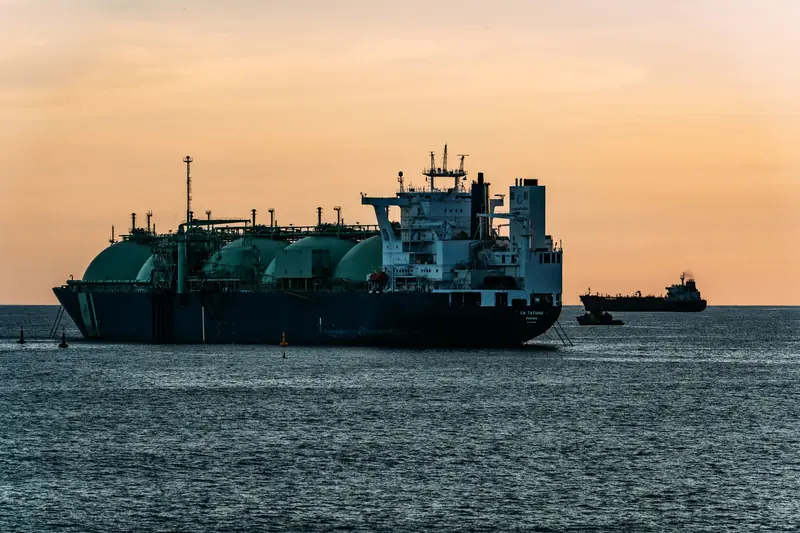
Despite its reserves, Iran has no LNG export capacity [2]. Three export projects were planned in the early 2000s. According to Argus, the most advanced, Iran LNG at Assaluyeh, was designed as two trains with 10.8 million tonnes a year (Mt/yr) of capacity. It stalled after sanctions linked to Iran's nuclear programme hindered the supply of its liquefaction equipment [9]. Two other schemes led by international oil companies, Pars LNG (10 Mt/yr) and Persian LNG (16.2 Mt/yr), were abandoned at an early stage [9].
In March 2023 Iran's oil minister said work on Iran LNG had resumed, with a target of completion by mid-2025 [9]. Argus noted two constraints. Sanctions complicate financing and access to technology, and the plant would need about 13.5 bcm a year of additional gas production at a time of rising domestic demand [9]. In March 2026 Reuters reported that Iran still had no LNG export capacity [2].
How did the 2026 conflict affect regional gas flows?
During the conflict that began at the end of February 2026, South Pars and the Asaluyeh processing hub were struck on 18 March [2,3]. The NIGC later said four gas processing plants were damaged, removing about 230 mcm/d of processing capacity. It plans to restore 75–80 mcm/d in four phases by the coming winter and early next year, and expects full recovery to take at least two to two-and-a-half years [4]. Offshore platforms linked to damaged onshore plants had to stop producing because their gas could not be processed. By the end of May, the Pars Oil and Gas Company said three platforms had returned to production [10].
Iraq felt the effect at once. On 18 March its electricity ministry said Iranian gas flows had fallen from 19 mcm to zero, removing more than 3.1 gigawatts (GW) from the national grid [8]. By 21 March supplies had resumed at 5 mcm/d, a fraction of the contracted volume, with officials expecting a gradual increase [11]. In August the NIGC said exports had been cut to a minimum and that domestic consumers would take priority in any further shortfall [4].
The wider regional market lost supply at the same time. The IEA says Qatar's Ras Laffan, the world's largest liquefaction facility, has been offline since an attack on 2 March. LNG supply from Qatar and the United Arab Emirates has fallen by more than 300 mcm/d since 1 March [12]. We examine the effect on LNG and fertiliser prices in our analysis of LNG, gas prices and urea in 2026.
What to watch
- Türkiye: whether Ankara and Tehran agree an extension or a new contract, and at what volume.
- Winter balance: progress in restoring the 75–80 mcm/d of processing capacity before peak heating demand [4].
- Iraq: daily flows against the 50 mcm/d contract rate during summer and winter peaks.
- Qatar: the restart timetable at Ras Laffan, which draws on the other side of the shared reservoir [12].
- Investment: compression and new phases at South Pars, which will decide whether output keeps pace with demand [1].
Alupetra follows Iranian gas supply as part of its regional market analysis and does not deal with sanctioned persons, entities or vessels.
Sources
- US EIA — Country Analysis Brief: Iran (10 October 2024). eia.gov (opens in a new tab)
- Baird Maritime (Reuters) — Factbox: Iran's giant South Pars gas field at the centre of Gulf war escalation (19 March 2026). bairdmaritime.com (opens in a new tab)
- The Energy Year — Israel strike on Iran's giant South Pars gasfield shakes energy markets (18 March 2026). theenergyyear.com (opens in a new tab)
- Shana — Efficiency, smarter consumption key to industry's future (1 August 2026). en.shana.ir (opens in a new tab)
- Gas Processing & LNG — Turkey says Iran gas pipeline contract nearing expiry, no talks yet on extension (20 April 2026). gasprocessingnews.com (opens in a new tab)
- Daily Sabah (AA) — Azerbaijan overtakes Russia as Türkiye's biggest pipeline gas supplier (14 August 2026). dailysabah.com (opens in a new tab)
- Energy Intelligence — Iran Will Likely Continue Gas Flows to Turkey After Contract Expiration (20 August 2026). energyintel.com (opens in a new tab)
- Enerdata — Iraqi grid loses over 3.1 GW as Iranian gas supplies drop to zero (20 March 2026). enerdata.net (opens in a new tab)
- Argus — Iran revives first LNG project, eyes mid-2025 start-up (9 March 2023). argusmedia.com (opens in a new tab)
- Yeni Şafak (AA) — Iran restarts gas output at three South Pars platforms (31 May 2026). en.yenisafak.com (opens in a new tab)
- BOE Report (Reuters) — Iranian gas to Iraq resumes after South Pars attack, Iraqi state news agency says (21 March 2026). boereport.com (opens in a new tab)
- IEA — The Middle East and Global Energy Markets (topic page, updated October 2026). iea.org (opens in a new tab)
- IEA — Strait of Hormuz Factsheet (February 2026). iea.blob.core.windows.net (opens in a new tab)
This article is for information only and is not investment, legal or trading advice. Figures are as reported by the sources cited on the date of publication.