Key figures
- 63 million m³Qatar's estimated helium production in 2025, out of world output of about 190 million m³.USGS
- 1.3 billion scfannual capacity of Ras Laffan's Helium 2 plant, which QatarEnergy calls the world's largest; Helium 1 adds 700 million scf.QatarEnergy LNG
- 0.04%estimated helium content of the North Field gas from which Qatar's helium is extracted.QatarEnergy LNG
- 309.54 million cubic feetannual helium output Qatar expects to lose, about 14%, until damaged LNG trains are rebuilt.Santiago & Company
- 5.2 million m³Qatar's monthly helium supply taken offline by the March 2026 shutdown.FPX
How does Qatar produce helium?
Qatar does not drill for helium. It extracts it as a by-product of its liquefied natural gas (LNG). The North Field gas that feeds the Ras Laffan LNG trains contains only a trace of helium, about 0.04% [1]. Because Qatar processes so much gas, that trace adds up to a large share of world supply.
Two helium refineries at Ras Laffan take helium-rich streams from the LNG trains, purify it and liquefy it for export [1]:
- Helium 1 started producing liquid helium in August 2005 and reached its capacity of 700 million standard cubic feet a year in 2008. Its offtakers are Linde and Air Liquide [1].
- Helium 2 began production in the third quarter of 2013, with capacity of 1.3 billion standard cubic feet a year. Its output is sold to Air Liquide (50%), Linde (30%) and Iwatani (20%) [1].
QatarEnergy LNG says that, with both plants at full capacity, it supplies about 25% of world helium production [1]. The US Geological Survey (USGS) estimates that Qatar produced 63 million cubic metres of helium in 2025, out of a world total of about 190 million [2]. Only the United States produced more.
The link to LNG is the key point. Qatari helium is produced only when the LNG trains run, so anything that stops LNG also stops helium.
What happened to Qatar's helium in 2026?
It stopped almost overnight. Ras Laffan Industrial City halted production on 2 March 2026, and QatarEnergy declared force majeure on its LNG and helium contracts on 4 March [3]. That removed roughly 5.2 million cubic metres of helium a month from the market [3]. Exiger, a supply chain risk firm, described the disruption as affecting about a third of global helium supply [4].
The damage then became physical. Iranian missile strikes on 18–19 March destroyed LNG trains 4 and 6, about 12.8 million tonnes a year of LNG capacity, or roughly 17% of Qatar's total [5]. QatarEnergy expects repairs to take three to five years [5]. Because helium comes from the same gas streams, Qatar said its annual helium output would fall by about 309.54 million cubic feet, around 14%, until the trains are rebuilt [5].
Even with production running, exports depend on shipping. The International Union of Marine Insurance (IUMI) noted that the Strait of Hormuz is the only export route for Qatari helium [6]. About 200 specialised liquid helium containers were stranded near the strait when the conflict began [7].
Has Qatar restarted helium production?
Partly. Ras Laffan restarted in June 2026, although an explosion during the restart killed 13 people, according to Al Jazeera reporting cited by Value Chain Asia [8]. In early August, AKAP Energy reported that Qatar had restarted helium production at Helium 2 and was shipping via Jeddah [9]. By October, industry sources described QatarEnergy as having restarted production at only a fraction of normal capacity [10].
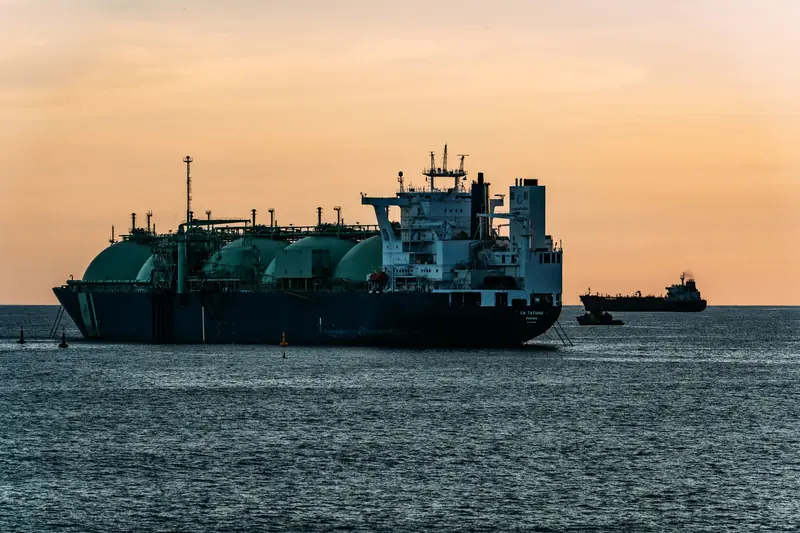
LNG shipping gives a useful signal, because helium output moves with LNG. Bloomberg and Kpler counted eleven laden Qatari LNG tankers leaving the Strait of Hormuz in the ten days to 8 November, with crossing rates broadly steady over the previous month [11]. Higher LNG output would mean more helium, but only if containers can also move out of the Gulf.
Who depends most on Qatari helium?
East Asia. South Korea sourced 64.7% of its helium from Qatar in 2025 [6]. Qatar and Russia together supplied about 98% of China's helium imports in 2025 [12]. Taiwan's exposure is lower but still significant [8].
Large buyers have been adjusting. Samsung Electronics and SK hynix signed new long-term helium supply agreements with Linde and Air Products, accepting higher prices for more diversified supply [13]. Air Liquide says it holds more than a year of supply stored underground in Germany, although that does not directly solve tightness in Asia [13].
What does Qatar's lower output mean for helium buyers?
Three things. First, the market loses part of Qatar's supply for years, not months: the 14% reduction lasts until the damaged trains are rebuilt [5]. Second, logistics recovery lags production recovery, because containers must be repositioned and refilled [7]. Third, buyers are paying more for security of supply, through long-term contracts with US and other producers [13].
Our earlier analyses cover how the Gulf crisis hit world helium supply and how helium prices have moved. For all our helium coverage, see the helium topic page.
Questions people ask about Qatar's helium
How much of the world's helium comes from Qatar?
About a third in 2025. The USGS estimates Qatar produced 63 million cubic metres out of about 190 million worldwide [2]. QatarEnergy describes its two Ras Laffan plants as able to supply about 25% of world production at full capacity [1].
Why did the Iran war stop Qatar's helium?
Because Qatar's helium is a by-product of its LNG. When Ras Laffan stopped producing LNG on 2 March 2026, helium stopped too, and the later missile strikes damaged trains that feed the helium plants [3,5].
When will Qatar's helium output return to normal?
Not fully until the damaged LNG trains are rebuilt, which QatarEnergy expects to take three to five years. Until then, Qatar expects helium output about 14% lower than before [5].
What to watch
- Ras Laffan LNG output, the best real-time signal for Qatari helium [11].
- Container movements through Hormuz, which decide how much helium actually reaches buyers [6,7].
- US–Iran talks, which affect both shipping and production at Ras Laffan.
- New long-term contracts by Asian chipmakers and gas companies [13].
Alupetra follows Qatari LNG and the helium market from Istanbul, London and Dubai; Alupetra does not deal with sanctioned parties.
Free tools for this topic: Strait of Hormuz tracker · Gas & LNG converter · Historical oil prices · Statistical price range · All tools
Sources
- QatarEnergy LNG — Ras Laffan Helium (company operations page, accessed November 2026). qatarenergylng.qa (opens in a new tab)
- US Geological Survey — Mineral Commodity Summaries 2026: Helium (2026). pubs.usgs.gov (opens in a new tab)
- FPX — Beyond power: the helium and tungsten bottlenecks (6 April 2026). research.fpx.world (opens in a new tab)
- Exiger — Iran war disrupts one-third of global helium supply (16 March 2026, updated 19 March 2026). exiger.com (opens in a new tab)
- Santiago & Company — The real helium crisis begins after the ceasefire (1 April 2026). santiagocompany.com (opens in a new tab)
- IUMI — Qatari helium shortages (9 June 2026). iumi.com (opens in a new tab)
- Tom's Hardware — Air Liquide opens Taiwan factory as helium shortage tightens around chip makers (27 March 2026). tomshardware.com (opens in a new tab)
- Value Chain Asia — Helium shortage 2026: Hormuz hits Taiwan's chip supply chain (1 May 2026, updated 27 September 2026). valuechainasia.com (opens in a new tab)
- AKAP Energy — Qatar restarts helium production at Helium 2, shipping via Jeddah (3 August 2026). akapenergy.com (opens in a new tab)
- Wessington Cryogenics — Is there a helium shortage in 2026? (updated 21 October 2026). wessingtoncryogenics.com (opens in a new tab)
- Rigzone (Bloomberg) — Qatar LNG loadings gain pace (10 November 2026). rigzone.com (opens in a new tab)
- Geopolitechs — Why China banned helium exports (10 July 2026). geopolitechs.org (opens in a new tab)
- Environment+Energy Leader — Qatar helium shock keeps Asia's chip supply under pressure (23 July 2026, updated 9 November 2026). environmentenergyleader.com (opens in a new tab)
This article is for information only and is not investment, legal or trading advice. Figures are as reported by the sources cited on the date of publication.