خلاصه به فارسی
پیش از جنگ ۲۰۲۶، جزیره خارک حدود ۹۰ درصد صادرات نفت خام ایران را انجام میداد و ذخیرهسازی در لاوان، سیری و پایانه جدیدتر جاسک در آن سوی تنگه هرمز از آن پشتیبانی میکرد. ایران همچنین حدود ۲٫۴ میلیون بشکه در روز ظرفیت پالایش دارد، از آبادان تا پالایشگاه میعانات گازی ستاره خلیج فارس. در این گزارش توضیح میدهیم این زیرساختها چگونه کار میکنند و رویدادهای سال ۲۰۲۶ جریانهای نفت را چگونه تغییر داده است.
Key figures
- 90%share of Iran's crude exports shipped through Kharg Island before the 2026 war.Reuters via Hydrocarbon Processing
- 28.3 million barrelscrude storage capacity on Kharg Island in 2023, equal to 4.5 million cubic metres.Platts via Hellenic Shipping News
- 2.4 million b/dIran's refining capacity including the Persian Gulf Star condensate splitter; crude refining capacity alone is nearly 2 million b/d across nine facilities.Argus
- ZeroIranian crude exports in September 2026, the first month without a shipment since Kpler began tracking Iran in 2013.Reuters via AJOT
- 135 million litres a dayIran's gasoline consumption in August 2026, when an official said at least 15 million litres a day needed to be imported.APA
Why does Kharg Island matter for Iran's oil exports?
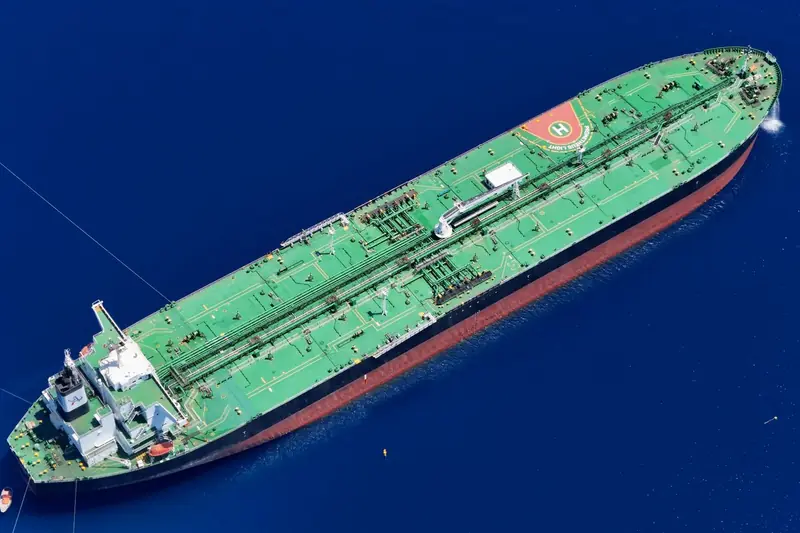
Kharg Island is the centre of Iran's crude export system. The island lies about 26 km off Iran's coast at the northern end of the Gulf, roughly 483 km north-west of the Strait of Hormuz. Before the 2026 war, about 90% of Iran's crude exports were shipped through the Kharg Island oil terminal [1]. In 2025 Al Jazeera put Kharg's throughput at close to 1.5 million barrels per day (b/d), or nearly all of Iran's crude exports [5].
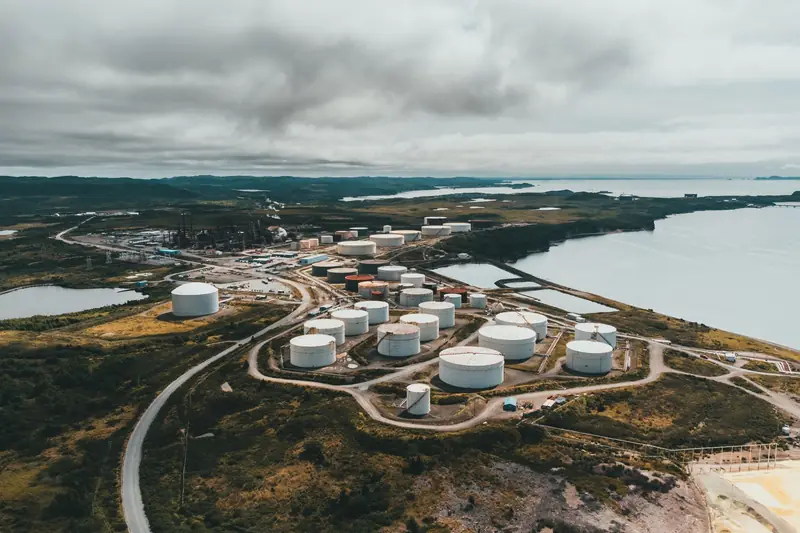
The terminal combines jetties, tank farms and processing. Kharg held 4.5 million cubic metres, or 28.3 million barrels, of crude storage in 2023. In May 2025 two refurbished tanks of 1 million barrels each returned to service [2]. National Iranian Oil Company (NIOC) managing director Hamid Bovard has said that Kharg is not only an export terminal but also processes oil from the Abouzar, Forouzan and Doroud offshore fields [2]. Kharg accounts for about a quarter of Iran's onshore crude storage capacity, according to the analytics firm Kayrros [3].
Across all its terminals, Iran has more than 8.0 million b/d of oil-loading capacity for exports, according to the US Energy Information Administration (EIA) [4]. That is well above recent export volumes. Kpler data cited by Al Jazeera show crude exports averaging 1.68 million b/d in 2025 [9]. China took nearly 90% of Iran's crude and condensate exports in 2023 [4].
What are Iran's other oil export terminals?
Several smaller island and coastal sites support Kharg. Lavan Island has about 900,000 cubic metres of storage and Sirri Island about 700,000 cubic metres, according to Platts. A 2024 report cited by Platts also listed 7 million barrels of crude and product storage on Qeshm Island [2].
Jask is the newest outlet. It sits east of the Strait of Hormuz and is designed to let exports bypass any disruption inside the Gulf [4]. The Goreh–Jask pipeline has a nameplate capacity of 1.0 million b/d, but the EIA said it carried only 300,000 b/d in mid-2024. It had not carried crude for export since a single cargo in July 2021 [4]. In 2024 Iran announced eight new crude storage units at Jask of 500,000 barrels each [2]. For background on the sea lanes involved, see our guide to the Hormuz, Red Sea and Bosphorus chokepoints.
Bandar Abbas, on the mainland coast near the strait, hosts the Persian Gulf Star condensate refinery [6].
How large is Iran's refining capacity?
Iran's refining capacity has grown over the past decade. Argus estimates that Iran has nearly 2 million b/d of crude refining capacity across nine facilities, and about 2.4 million b/d including the Persian Gulf Star condensate splitter, up from below 1.9 million b/d a decade earlier [6]. The National Iranian Oil Refining and Distribution Company (NIORDC) also gave a figure of 2.4 million b/d in June 2025 [7]. The consultancy FGE puts domestic capacity at 2.6 million b/d [1]. Estimates differ partly because some include condensate splitters and others do not [6].
The main plants are:
- Abadan, one of the oldest and largest refineries in the Middle East [5]. The Anglo-Persian Oil Company established it in 1909 and it began operating in 1913. By the late 1970s it was perhaps the largest refinery in the world. Its plants were destroyed by bombardment in 1980, during the Iran–Iraq war, and refining restarted on a smaller scale with reconstructed plants after the war ended in 1988 [8]. Argus now lists it at 630,000 b/d [6], and a 210,000 b/d distillation unit was added in March 2023 [4].
- Persian Gulf Star in Bandar Abbas, Iran's largest condensate refinery, which processes condensate from the South Pars gas field. Argus gives its capacity as 360,000 b/d and the EIA as 420,000 b/d, with a further 120,000 b/d unit under construction [4,6].
- Tehran, at 220,000 b/d, and Shiraz, at 58,000 b/d, both of which have had capacity additions [6].
- Isfahan, where NIORDC reported an increase of 30,000–40,000 b/d [7].
Iran's fuel exports and gasoline imports
Iran is a large exporter of refined products. Product exports exceeded 1 million b/d in 2023, with LPG, fuel oil and diesel making up more than 70% of the total [4]. Kpler estimates that fuel exports, including LPG, averaged about 820,000 b/d in 2025, slightly below 2024 [1].
Gasoline is the exception. In the Iranian year to 20 March 2025, gasoline production of about 660,000 b/d fell short of average consumption of 780,000 b/d, according to NIORDC data cited by Argus [6]. Iran has turned to imports to close the gap [6].
That balance has tightened in 2026. In August, Yaser Mirzayi, deputy head of Iran's Energy Efficiency and Strategic Management Organization, said consumption was about 135 million litres a day and that Iran needed to import at least 15 million litres a day. He said financing, access to foreign currency and logistics on southern routes were limiting imports [10].
How did 2026 affect Kharg Island and Iranian oil flows?
Exports fell sharply after the United States began enforcing a naval blockade of Iranian ports on 13 April. Vortexa data showed exports of nearly 1.9 million b/d in March, 1.34 million b/d in April and about 209,000 b/d in May [11]. The blockade was lifted in June after a draft understanding and reimposed on 14 July [12]. US Central Command was still enforcing it as of 22 October [13].
Kharg itself has kept operating. The US military carried out strikes on military targets on the island in April but said they did not affect oil infrastructure. In late August NIOC chief Bovard said operations at Kharg had not stopped [1]. On 8 April a refinery on Lavan Island was hit in what the refining company called an "enemy attack". It reported no casualties, and firefighting teams worked to contain the blaze [14].
With few cargoes leaving, storage became the main constraint. Kharg's tanks were about 74% full on 20 April; operators generally avoid running storage above 80% [9]. By 20 May Kayrros estimated Kharg at 77% full, Goreh above 90% and Jask just under 50%. Iran's onshore inventories had risen by about 13 million barrels since the blockade began [3]. In August Iran loaded just 251,000 b/d, and stocks on Kharg fell by 550,000 barrels to 19.45 million barrels, according to Kpler [1]. Only one very large crude carrier (VLCC) loaded at Kharg that month [15].
Kpler data show crude exports reached zero in September, the first month without a shipment since it began tracking Iran in 2013. Reuters reported that limited volumes of LPG and jet fuel had still been shipped [12].
What to watch at Iran's terminals and refineries
- Export access. Whether the blockade is lifted, and how quickly Kharg loadings recover, will decide how fast Iranian crude returns to the market [12,13].
- Storage levels. Kharg's fill rate against the usual 80% ceiling is a guide to pressure on upstream output [3,9].
- Jask. The terminal outside the Gulf gives Iran a second outlet, but its pipeline has run well below nameplate capacity [4].
- Gasoline balance. Demand, which officials expect to rise in the coming months, and import access will show whether domestic refining can cover consumption [10].
- Refinery projects. The extra 120,000 b/d condensate unit at Persian Gulf Star and other expansions would raise product supply once complete [4].
Alupetra follows Iranian supply as part of its market analysis from its Istanbul, London and Dubai offices; it does not deal with sanctioned persons, entities or vessels.
Sources
- Hydrocarbon Processing (Reuters) — A look at Iran's Kharg Island and energy sector (31 August 2026). hydrocarbonprocessing.com (opens in a new tab)
- Hellenic Shipping News (S&P Global Platts) — Iran adds 2 million barrels of crude storage capacity (19 May 2025). hellenicshippingnews.com (opens in a new tab)
- Kayrros — The US blockade is putting pressure on Iran, but its oil industry can still hold out (20 May 2026). kayrros.com (opens in a new tab)
- US EIA — Country Analysis Brief: Iran (10 October 2024). eia.gov (opens in a new tab)
- Al Jazeera — Mapping Iran's oil and gas sites and those attacked by Israel (17 June 2025). aljazeera.com (opens in a new tab)
- Argus — Iran's refineries at risk in escalating conflict (20 June 2025). argusmedia.com (opens in a new tab)
- Shana — Iran's refining capacity reaches 2.4 mbd (2 June 2025). en.shana.ir (opens in a new tab)
- Encyclopaedia Britannica — Abadan (accessed 27 October 2026). britannica.com (opens in a new tab)
- Al Jazeera — Is Iran's oil storage nearly full – and will it have to cut production? (29 April 2026). aljazeera.com (opens in a new tab)
- APA — Iran needs to import at least 15 million liters of gasoline per day (20 August 2026). en.apa.az (opens in a new tab)
- Baird Maritime (Reuters) — Iran oil exports feel the squeeze, hitting a six-year low (4 June 2026). bairdmaritime.com (opens in a new tab)
- AJOT (Reuters) — Iran ships some LPG, jet fuel despite US blockade, data shows (16 October 2026). ajot.com (opens in a new tab)
- Lloyd's List Intelligence — Strait of Hormuz Brief: 22 October, 2026 (22 October 2026). lloydslistintelligence.com (opens in a new tab)
- Hydrocarbon Processing (Reuters) — Iranian oil refining co confirms attack on Lavan refinery (8 April 2026). hydrocarbonprocessing.com (opens in a new tab)
- The Maritime Executive — Iran's Floating Oil Storage Shrinks to Five-Month Supply (26 August 2026). maritime-executive.com (opens in a new tab)
This article is for information only and is not investment, legal or trading advice. Figures are as reported by the sources cited on the date of publication.