خلاصه به فارسی
ایران برخی از بزرگترین ذخایر نفت جهان را در اختیار دارد که در میادین عظیم خشکی در جنوب غرب کشور، مانند اهواز، مارون و گچساران، متمرکز است. در این گزارش بررسی میکنیم که این ذخایر چه اندازه است، میادین اصلی چگونه توسعه داده میشوند و اختلال صادرات در سال ۲۰۲۶ چه معنایی برای ظرفیت تولید و چشمانداز آینده دارد.
Key figures
- 208.6 billion barrelsIran's proven oil reserves as cited by Shana, the oil ministry's news service, ranking third in the world after Venezuela and Saudi Arabia.Shana
- 3.8 million b/dthe EIA's assessment of Iran's full crude production capacity, which it said could be reached within six months of sanctions being lifted.EIA
- 2.48 million b/dIranian crude output in July 2026, according to OPEC secondary sources.Reuters via Hydrocarbon Processing
- 1.957 million b/dIranian crude output in September 2026, down 99,000 b/d from August, according to OPEC's monthly report.TASS
- August–October 2026the months whose average output will set Iran's 2027 capacity level in OPEC+, as assessed by OPEC's secondary sources.Argus
How large are Iran's oil reserves?
Iran's oil reserves are among the largest in the world, and Iran is the third-largest producer in OPEC [5]. In September 2024 Shana, the oil ministry's news service, put Iran's proven oil reserves at 208.6 billion barrels. It cited a World Atlas ranking that placed Iran third, after Venezuela and Saudi Arabia [2]. The US Energy Information Administration (EIA), which uses Oil & Gas Journal data, also ranks Iran third. It estimates that Iran held 24% of the Middle East's oil reserves and 12% of the world's at the end of 2023 [1].
Published volumes vary with source and method. Al Jazeera, drawing on EIA material, used a figure of about 157 billion barrels in 2025 [3].
Iran is also a gas giant. Its proved natural gas reserves were 1,200 trillion cubic feet (Tcf) at the end of 2023, second only to Russia and about 16% of the world total [1]. Much of that gas, and the condensate produced with it, comes from the offshore South Pars field. South Pars makes up around a third of the world's largest gas reservoir, which Qatar calls the North Dome [5].
The industry has a long engineering history. Oil was discovered at Masjed Soleyman in 1908, and the town became one of Iran's leading oil centres. Pipelines completed in 1909–10 linked it to Abadan, about 200 km to the south-west [4].
Where are the largest oil fields in Iran?
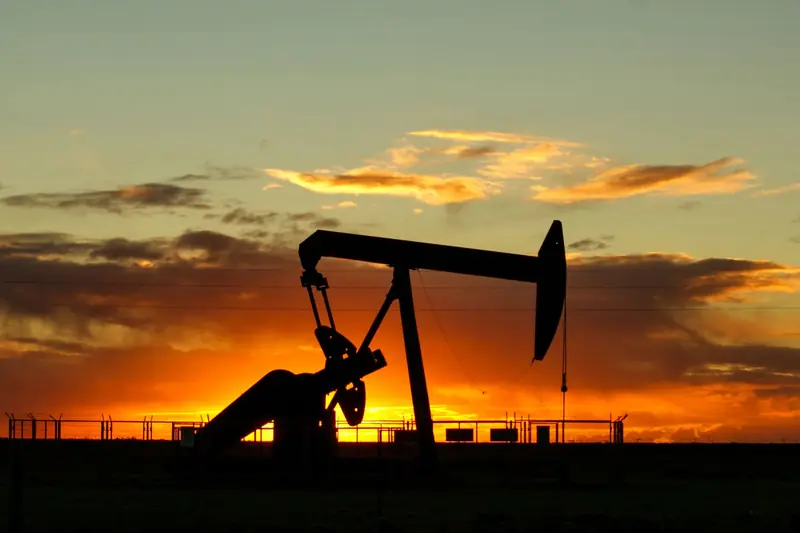
Iran's oil fields and facilities are concentrated in the south-western province of Khuzestan [5]. The Ahvaz oil field is Iran's largest and one of the largest in the world. Gachsaran is the second-largest Iranian field and produces light crude, while Marun, near Ahvaz, is a high-output field [3]. Other important onshore fields include Agha Jari, Bibi Hakimeh and Karanj, mostly in Khuzestan [3].
These fields also produce associated gas. The EIA lists an East Karun project designed to process associated gas from the Maroun, Gachsaran, Aghajari and Reg-e-Safid fields [1]. Capturing that gas matters: Iran vented or flared about 721 billion cubic feet (Bcf) of gas in 2023, 19% more than in 2022 [1].
The EIA notes that, with little foreign investment in recent years because of sanctions, local firms are limited in the capital and technology needed to maintain production at mature fields [1].
Azadegan, Yadavaran and the offshore fields
Iran intends to develop the West Karun fields along the border with Iraq, namely Azadegan, Yadavaran and Yaran. In 2024 the EIA said these projects had made limited progress over several years [1].
Azadegan is the largest of them, with about 32 billion barrels of oil in place. In March 2025 the oil minister said its output had risen by at least 50,000 b/d, and reports put total production at a minimum of 192,000 b/d. The Petroleum Engineering and Development Company (PEDEC) aims for stable output of 550,000 b/d within eight years. About $10 billion has been earmarked for the second development phase of North and South Azadegan [6]. At Yadavaran, 24 wells were being drilled, with a target of 45,000 b/d within two years [6].
Smaller projects add capacity too. Pasargad Energy Development Company began production at the Jufair and Sepehr fields in March 2024. Iran estimated their output at 50,000 b/d, against a capacity of 110,000 b/d [1].
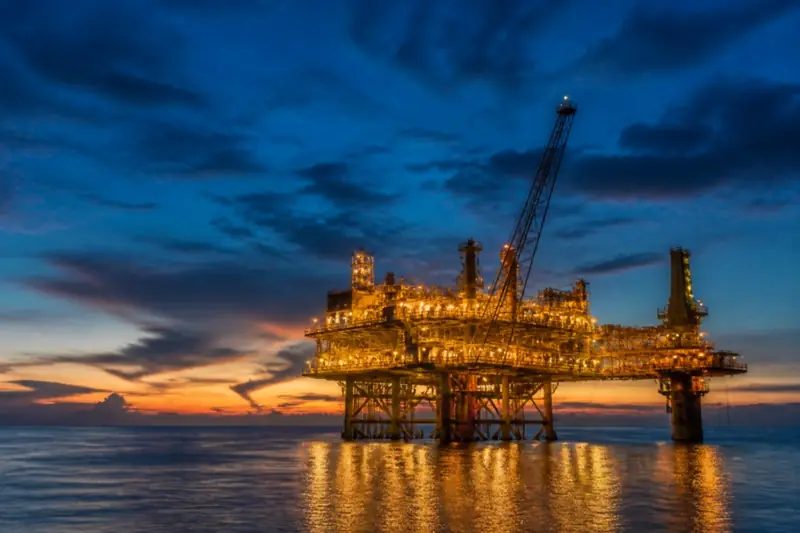
Offshore, Gulf fields such as Abuzar, Foroozan, Doroud and Salman include reservoirs shared with Saudi Arabia and the United Arab Emirates [3]. According to National Iranian Oil Company (NIOC) managing director Hamid Bovard, Kharg Island is not only an export terminal but also processes oil from the Abouzar, Forouzan and Doroud offshore fields [11].
Mature fields, enhanced recovery and the IPC
Keeping mature reservoirs productive needs steady investment. Gas injection is one established tool: NIOC reinjected 0.6 Tcf of natural gas into oil wells for enhanced oil recovery (EOR) in 2023 [1]. Between 2019 and 2022, Iran also awarded contracts to domestic companies to add about 550,000 b/d of crude capacity at existing south-western fields [1].
The investment need is large. A December 2024 oil ministry report, as summarised by Energynews, said crude output had fallen by 426,000 b/d since sanctions were imposed in 2018. It warned that output could drop to 2.75 million b/d within four years. The ministry estimated that $3 billion would raise production capacity to 3.85 million b/d [7]. Oil Minister Mohsen Paknejad set out a plan to renovate existing fields, drill new wells and inject solvents into declining wells. He was also considering development agreements for 14 reservoirs, including Gachsaran, the Bangestan layer of Ahvaz and Bibi Hakimeh, requiring $25 billion in total [7].
Iran's upstream development agreements include contracts under the Iran Petroleum Contract (IPC) model. In April 2025 Paknejad said 16 IPC contracts had been signed for 23 oil and gas fields, with total investment of more than $27 billion. Nine of them, worth about $13 billion, were being implemented. The ministry also presented about 200 investment packages worth more than $135 billion and launched an oil guarantee fund to support investors. Paknejad said there were no restrictions on foreign investors that met the necessary requirements [8].
What is Iran's oil production capacity in 2026?
Before 2026, Iran had been rebuilding output. Total liquids production averaged 4.0 million b/d in 2023, of which crude was almost 2.9 million b/d [1]. A Platts survey put crude output at 3.23 million b/d in February 2025, behind only Saudi Arabia and Iraq in OPEC [6]. The EIA assesses full crude capacity at 3.8 million b/d [1].
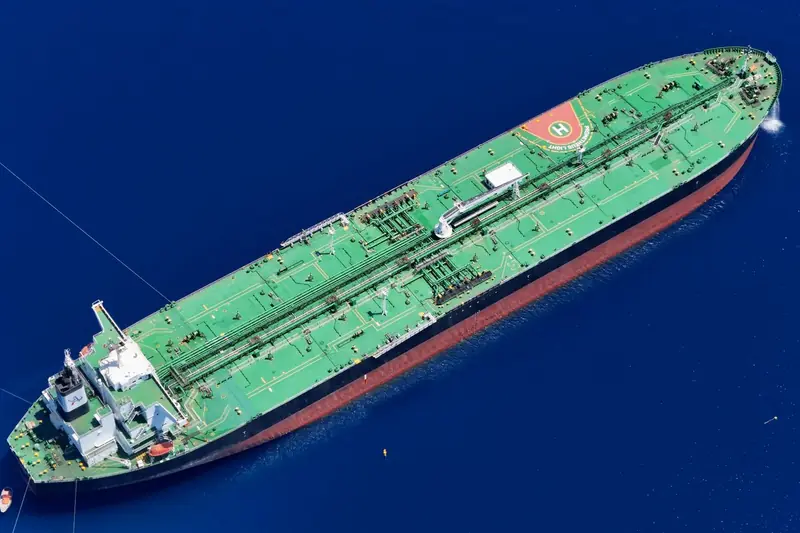
In 2026 the main constraint has been exports rather than reserves. Vortexa data put Iranian exports at nearly 1.9 million b/d in March. They fell to about 209,000 b/d in May after the United States began enforcing a naval blockade of Iranian ports on 13 April [12]. The blockade was lifted in June after a draft understanding and reimposed on 14 July. Kpler data show that Iranian crude exports fell to zero in September, the first month without a shipment since it began tracking Iran in 2013 [13]. As of 22 October, US Central Command was still enforcing the blockade [10].
Production has adjusted more gradually. Iran pumped 2.48 million b/d of crude in July, according to OPEC secondary sources [5], and 1.957 million b/d in September, 99,000 b/d less than in August [14]. Iran has also drawn on oil held at sea. Kpler estimates that Iranian floating storage fell from 192 million barrels in mid-April to about 80 million barrels at the end of August [15].
Lower output carries technical risks as well as commercial ones. Analysts quoted by Al Jazeera noted that halting production can reduce reservoir pressure, let water or gas enter producing layers and make oil harder or costlier to recover. Restarting wells can also be slow and costly [9]. Onshore storage is a constraint: Kharg Island's tanks were about 74% full in April, and operators generally avoid running them above 80% [9].
Outlook: what to watch in Iran's upstream
- The OPEC+ baseline. Under the mechanism agreed in November 2025, Iran's 2027 capacity level will be the average of its August–October 2026 production, as assessed by OPEC's secondary sources [16]. Output in those months has been well below the EIA's 3.8 million b/d capacity estimate [1,14].
- Export routes. A recovery in production depends on access to Kharg and other terminals and on shipping through the Gulf. Our guide to the Hormuz, Red Sea and Bosphorus chokepoints explains the routes involved.
- Reservoir performance. How quickly the large Khuzestan fields return to earlier rates once constraints ease will show whether months of reduced output have affected recovery [9].
- Project delivery. Progress towards 550,000 b/d at Azadegan and 45,000 b/d at Yadavaran, and the pace of the IPC programme, will shape capacity later in the decade [6,8].
Iran's reserves and capacity are large relative to its current output [1,14]. In the near term, its contribution to world supply depends mainly on export access, investment and the condition of its mature fields.
Alupetra follows Iranian supply as part of its market analysis from its Istanbul, London and Dubai offices; it does not deal with sanctioned persons, entities or vessels.
Sources
- US EIA — Country Analysis Brief: Iran (10 October 2024). eia.gov (opens in a new tab)
- Shana — Iran Holds World's 3rd Largest Oil Reserves (7 September 2024). en.shana.ir (opens in a new tab)
- Al Jazeera — Mapping Iran's oil and gas sites and those attacked by Israel (17 June 2025). aljazeera.com (opens in a new tab)
- Encyclopaedia Britannica — Masjed Soleymān (accessed 27 October 2026). britannica.com (opens in a new tab)
- Hydrocarbon Processing (Reuters) — A look at Iran's Kharg Island and energy sector (31 August 2026). hydrocarbonprocessing.com (opens in a new tab)
- S&P Global Commodity Insights — Iran's Azadegan oil field adds another 50,000 b/d of production (26 March 2025). spglobal.com (opens in a new tab)
- Energynews — Iran: the energy crisis deepens as oil production declines (5 December 2024). energynews.pro (opens in a new tab)
- ITA – Italian Trade Agency (citing Iran Daily) — Iran unveils $135B investment opportunities in petroleum sector (23 April 2025). aziendeaccordi.ice.it (opens in a new tab)
- Al Jazeera — Is Iran's oil storage nearly full – and will it have to cut production? (29 April 2026). aljazeera.com (opens in a new tab)
- Lloyd's List Intelligence — Strait of Hormuz Brief: 22 October, 2026 (22 October 2026). lloydslistintelligence.com (opens in a new tab)
- Hellenic Shipping News (S&P Global Platts) — Iran adds 2 million barrels of crude storage capacity (19 May 2025). hellenicshippingnews.com (opens in a new tab)
- Baird Maritime (Reuters) — Iran oil exports feel the squeeze, hitting a six-year low (4 June 2026). bairdmaritime.com (opens in a new tab)
- AJOT (Reuters) — Iran ships some LPG, jet fuel despite US blockade, data shows (16 October 2026). ajot.com (opens in a new tab)
- TASS — OPEC+ countries increase oil production by 956,000 bpd in September — report (13 October 2026). tass.com (opens in a new tab)
- The Maritime Executive — Iran's Floating Oil Storage Shrinks to Five-Month Supply (26 August 2026). maritime-executive.com (opens in a new tab)
- Argus — Opec+ agrees mechanism to set new production baselines (30 November 2025). argusmedia.com (opens in a new tab)
This article is for information only and is not investment, legal or trading advice. Figures are as reported by the sources cited on the date of publication.