خلاصه به فارسی
ایران با استفاده از گاز میدان پارس جنوبی بهعنوان خوراک، تأمینکنندهای مهم برای متانول، اوره و الپیجی در بازارهای جهانی است. چین بخش عمده متانول و الپیجی آن را خریداری میکند و اوره ایران به بازارهایی از جمله ترکیه و برزیل میرسد. در این گزارش مقیاس این صنعت، بازارهای مقصد و تأثیر درگیری سال ۲۰۲۶ بر عرضه و قیمت جهانی متانول و اوره را بررسی میکنیم.
Key figures
- 97 million tnominal capacity of Iran's petrochemical industry in the Iranian year to March 2025; output was 75.2 million t and exports 29.2 million t, worth $13 billion.NPC, via Shana
- 11%Iran's share of global methanol nameplate capacity, the second-largest after mainland China.OPIS
- 8.7 million tChina's methanol imports from Iran in 2025, about 60% of its total methanol imports.Sina Finance, via Biofuels Digest
- 9 million t/yrIran's urea production capacity; typical exports are about 5 million t/yr.Argus
- 11.45 million tIran's LPG exports in 2025, of which 84.2% went to China.Vortexa data, via OPIS
How big is Iran's petrochemical industry?
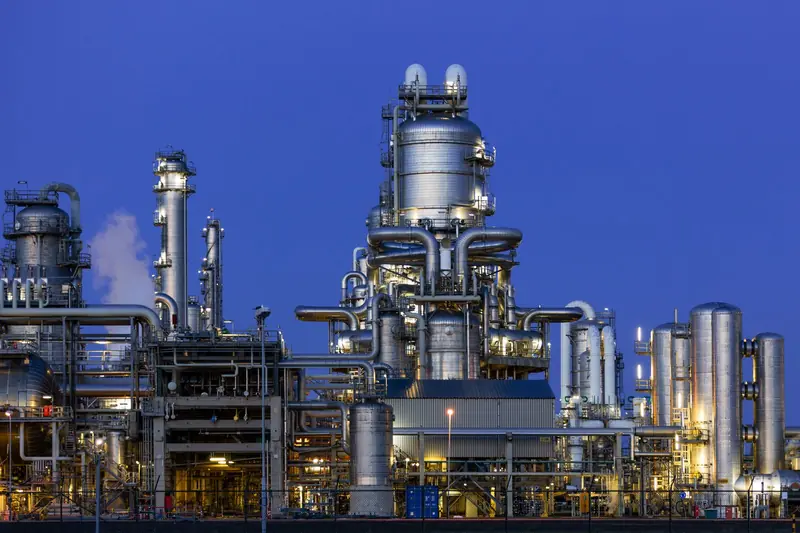
Iran's petrochemical exports rest on its natural gas. According to the National Petrochemical Company (NPC), the industry's nominal capacity reached about 97 million tonnes (t) in the Iranian year 1403, which ended in March 2025 [1]. Output that year was 75.2 million t. Exports totalled 29.2 million t, worth $13 billion, while domestic sales were 13.1 million t, worth $11 billion [1]. The NPC expected capacity to reach 105 million t by March 2026 [1].
Gas is the backbone of the sector. The South Pars field, which Iran shares with Qatar, supplies 70–75% of Iran's gas production and a significant share of the feedstock for its petrochemical industry [2]. The US Energy Information Administration (EIA) notes that petrochemical growth drove industrial gas use in 2023 and that the sector will need more gas as it expands [3].
Two coastal hubs are central to the export trade. The Pars Special Economic Energy Zone at Assaluyeh, on the Gulf coast, hosts at least 21 operating petrochemical plants fed by South Pars gas [2]. Much of Iran's methanol production is concentrated there [5]. The second cluster is the Mahshahr Special Petrochemical Zone in Khuzestan province, in south-western Iran [4].
Methanol: Iran's weight in world trade
Methanol is a basic chemical made from natural gas or coal; in China it is also used in methanol-to-olefins (MTO) plants. According to OPIS, Iran holds 11% of global methanol nameplate capacity, making it the world's second-largest producer after mainland China [6]. It exports well over 90% of its output, mainly to mainland China and India, and is the main source of imported methanol in Asia, especially on China's east coast [6].
China is the largest buyer. There are no official data on Chinese imports from Iran, but OPIS estimates Iran's share at 50% or more, with the Middle East supplying about 70% of China's methanol imports [6]. Chinese estimates cited by Biofuels Digest put imports from Iran at about 8.7 million t in 2025, roughly 60% of China's total methanol imports [5].
Most of this trade moves by sea. The Strait of Hormuz carries about 35% of global seaborne methanol trade and is the main export route for Iranian cargoes [5]. Western Europe receives no Iranian methanol directly because of sanctions [6].
Urea and ammonia: a major Middle East supplier
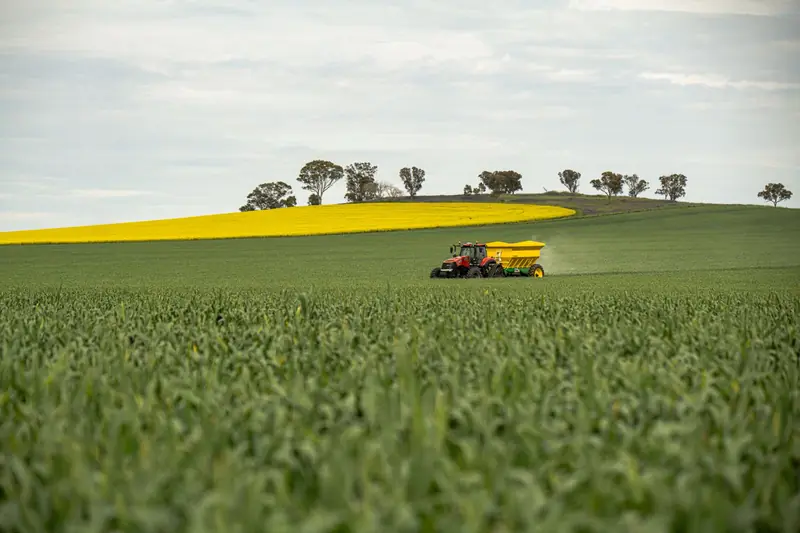
Urea is a nitrogen fertiliser made from ammonia, which is produced from natural gas. Argus puts Iran's urea capacity at 9 million t/yr, with typical exports of about 5 million t/yr [7]. StoneX analysts ranked Iran the third-largest urea exporter in 2024, with about 4.5 million t. An analyst at ICIS named Türkiye, Brazil and Argentina among its export markets. Iran also exports ammonia [8].
Supply follows a seasonal pattern. Iran often cuts urea output in winter, when domestic heating takes priority for gas. In the 2024–25 winter, production was largely limited to a single granular unit from early December. Plants returned to full output in March 2025, and exports were expected to return to typical rates from April [7].
The wider region shapes world prices. Argus estimates that the Middle East supplies about 20 million t/yr of urea, close to a third of global exports [9]. The International Energy Agency (IEA) says more than 30% of global urea trade and about 20% of ammonia trade passes through the Strait of Hormuz [10].
LPG: a large exporter focused on China
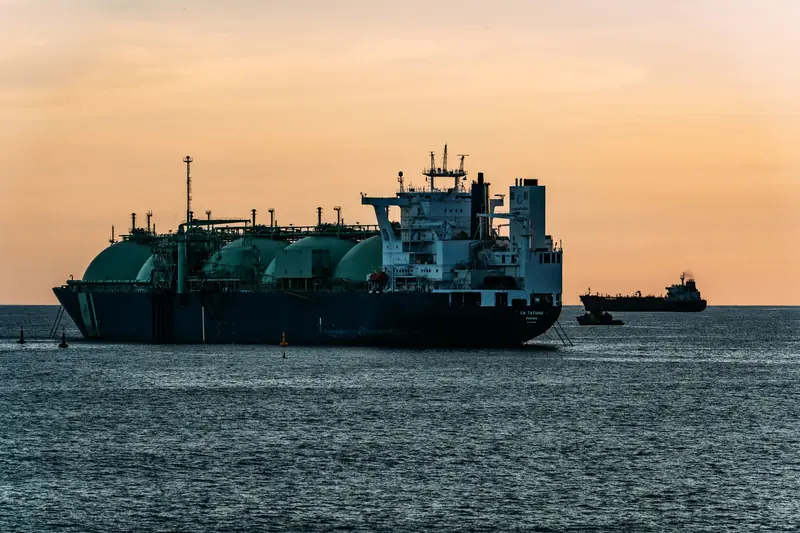
Liquefied petroleum gas (LPG), a mix of propane and butane, is also a significant export. Vortexa data cited by OPIS show Iranian LPG exports of 11.45 million t in 2025. China took 9.64 million t, or 84.2% [11]. Kpler data published by Argus show loadings at Asaluyeh of 1.90 million t in 2025, up 88.2% on 2024 [12].
Iran's cargoes are part of a larger Gulf trade. Around 44.2 million t of LPG passed through Hormuz in 2025, about 30% of global seaborne LPG exports [12]. For the wider supply and price picture, see our review of the LPG market in 2026.
Which markets buy Iranian petrochemicals?
The pattern differs by product. China is the main buyer of both methanol and LPG. Iran supplies at least half of China's methanol imports, and China took about 84% of Iran's LPG exports in 2025 [5,6,11]. India is the other main destination for Iranian methanol [6], and S&P Global notes that the Middle East as a whole was India's majority methanol supplier in 2025 [14].
Urea goes to a wider range of buyers, including Türkiye and South American markets such as Brazil and Argentina [8]. Western Europe does not import Iranian methanol directly [6]. Chinese demand therefore matters for Iranian sales, including at MTO plants, which OPIS says were already running on low or negative cash margins before the conflict [6].
How did the 2026 conflict affect methanol and urea markets?
Iranian plants. The conflict began on 28 February 2026 [14]. Iranian plants then faced power shortages, physical damage and shipping disruption. OPIS reported in late March that power outages had cut methanol operating rates below 60% in some areas [6]. On 4 April strikes hit the Mahshahr zone, where Fars News Agency reported that three companies were affected [4]. Argus reported that production was shut across the hub [2]. On 6 April the Assaluyeh complex was struck. The NPC said several ancillary facilities were damaged, and state media said the power and desalination plants serving the zone were hit, causing widespread power disruption [2]. The World Bank reported that Iran halted ammonia production during the conflict [13].
Methanol prices. S&P Global estimated that about 18% of global methanol capacity was affected. By 20 March, Southeast Asian prices had risen 72% since the war began, to $555/t, and Chinese prices 46.5%, to $381/t. European prices rose about 47% and US prices about 18% [14]. Argus noted that spot prices rose above $600/t and later fell below $300/t as flows resumed, with demand destruction particularly in China's MTO sector [15]. Tightness returned later in the year. In mid-September ChemAnalyst reported that Iran's methanol sector was operating at only 36% of capacity, and CFR Qingdao prices up 8.74% in the week to 11 September [16]. Earlier in the year, Chinese companies were reported to be accelerating coal-based methanol production and seeking supply from Russia and Central Asia [5].
Urea prices. The World Bank reported urea above $850/t in April, up 80% since February and the highest since April 2022 [13]. Argus said outages at plants, particularly in Iran, reduced supply further in March. Prices reached nearly $780/t fob by mid-April before falling to around $330/t fob on expectations of Chinese exports. By late July, renewed hostilities between the United States and Iran were supporting prices again [9]. The World Bank expects urea prices to rise nearly 60% in 2026 before easing in 2027 as Middle East exports recover [13].
LPG and policy. In June, after a US–Iran agreement aimed at ending the conflict, the United States granted a 60-day sanctions waiver covering Iranian crude, petrochemical and petroleum products, OPIS reported. Analysts estimated it could raise Iranian LPG exports by 10–30%, but buyers were cautious because of its temporary nature [11]. Iranian LPG exports in January–May 2026 were 3.65 million t, with 77.7% going to China [11].
What to watch
- Repairs: the pace of recovery at damaged power and processing facilities in Assaluyeh and Mahshahr [2].
- Winter gas supply: whether household heating demand again curbs urea output [7].
- Hormuz shipping: the main route for Iranian methanol and a large share of world urea trade [5,10].
- China's methanol balance: new Chinese capacity due in October and restarts at coal-based plants could erode the current risk premium [16].
- Policy measures: changes to sanctions or waivers, which affect trade flows and pricing [11].
Alupetra follows Iranian petrochemical supply as part of its analysis of methanol, urea and LPG markets and does not deal with sanctioned persons, entities or vessels.
Sources
- Shana — Petchem production capacity to hit 105m tons by year-end (2025). en.shana.ir (opens in a new tab)
- Tank Terminals (Argus) — Israel Hits Iran's Assaluyeh Petchem Complex (6 April 2026). tankterminals.com (opens in a new tab)
- US EIA — Country Analysis Brief: Iran (10 October 2024). eia.gov (opens in a new tab)
- Al Arabiya (AFP) — US-Israeli strikes hit petrochemicals hub in Iran (4 April 2026). english.alarabiya.net (opens in a new tab)
- Biofuels Digest — Iran war scrambles methanol trade routes (5 March 2026). biofuelsdigest.com (opens in a new tab)
- OPIS — The Impact of US-Iran Conflict on Methanol Markets (26 March 2026). opis.com (opens in a new tab)
- Argus — Iranian urea offers fall to $370/t fob, output ramps up (17 March 2025). argusmedia.com (opens in a new tab)
- Agri-Pulse — Middle East conflict throws more uncertainty into global fertilizer markets (16 June 2025). agri-pulse.com (opens in a new tab)
- Argus — Urea Market Outlook: Middle East Supply Disruptions (27 July 2026). argusmedia.com (opens in a new tab)
- IEA — The Middle East and Global Energy Markets (topic page, updated October 2026). iea.org (opens in a new tab)
- OPIS — US Waiver on Iranian Energy Exports Fails to Spur Asia's LPG Buying Interest (23 June 2026). opis.com (opens in a new tab)
- Argus — Global LPG price response to the Iran war, Argus LPG World insight paper (March 2026). view.argusmedia.com (opens in a new tab)
- World Bank Blogs — Fertilizer prices surge as Strait of Hormuz disruptions tighten supplies (14 May 2026). blogs.worldbank.org (opens in a new tab)
- S&P Global — Global methanol prices soar in response to Middle East war (20 March 2026). spglobal.com (opens in a new tab)
- Argus — Methanol market volatility, video insight (9 July 2026). argusmedia.com (opens in a new tab)
- ChemAnalyst — Iran Supply Shock Meets China's Q4 Capacity Wave in Methanol Market (17 September 2026). chemanalyst.com (opens in a new tab)
This article is for information only and is not investment, legal or trading advice. Figures are as reported by the sources cited on the date of publication.